
JANUARY 29, 2015
The Aftermath of
Police Shootings
BY JEHAN JILLANI
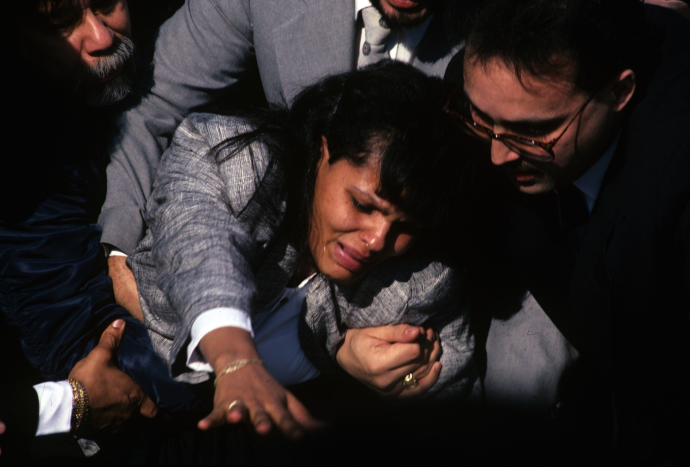
Lucy, the mother of Jose Luis Lebron, at her son’s funeral. Lebron was shot in Bushwick, in January, 1990, by an N.Y.P.D. officer who thought that the fourteen-year-old had a gun.
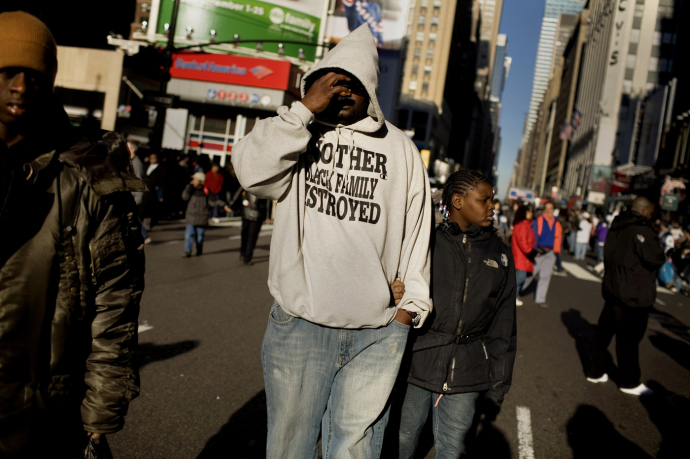
Thousands of people march down Fifth Avenue to protest the 2006 shooting of Sean Bell by N.Y.P.D. officers.
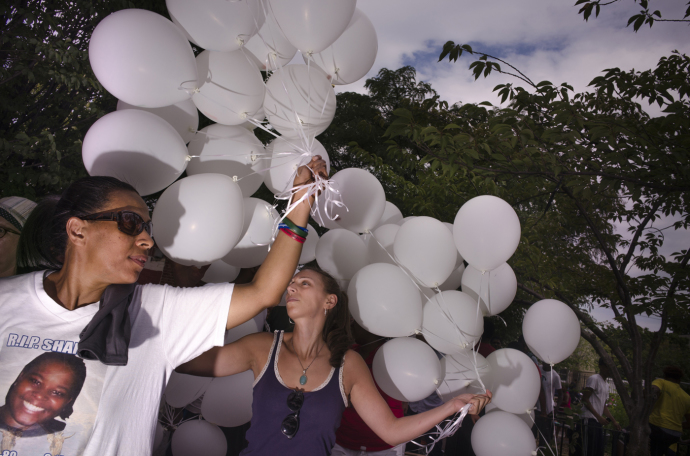
A memorial event in Brooklyn’s Tilden Park for Shantel Davis and Kimani Grey, who were shot in East Flatbush in two separate incidents—in 2012 and in 2013, respectively.
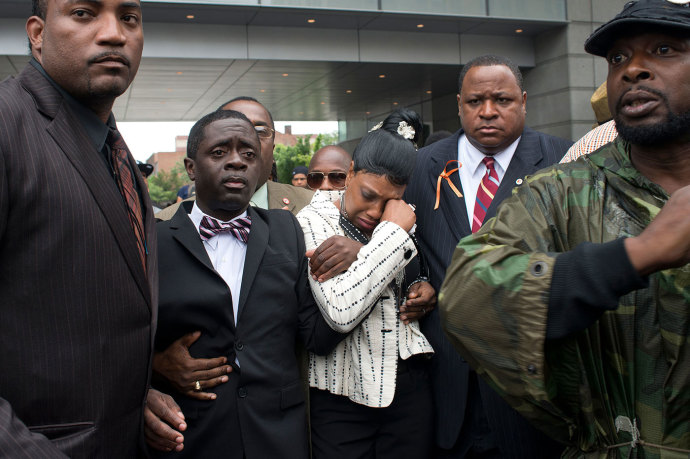
The parents of Ramarley Graham, an eighteen-year-old unarmed teen-ager who was shot by an N.Y.P.D. officer in 2012.
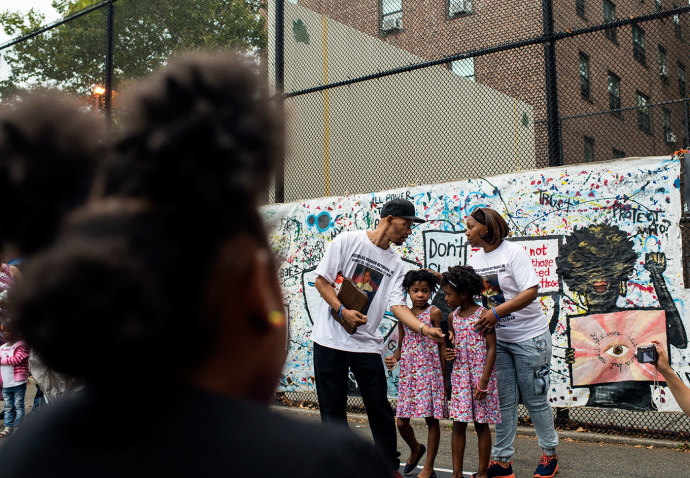
The twentieth annual day of remembrance for Nicholas Heyward, Jr., a thirteen-year-old who was playing cops and robbers with a toy gun when he was shot to death by an N.Y.P.D. housing officer in 1994.
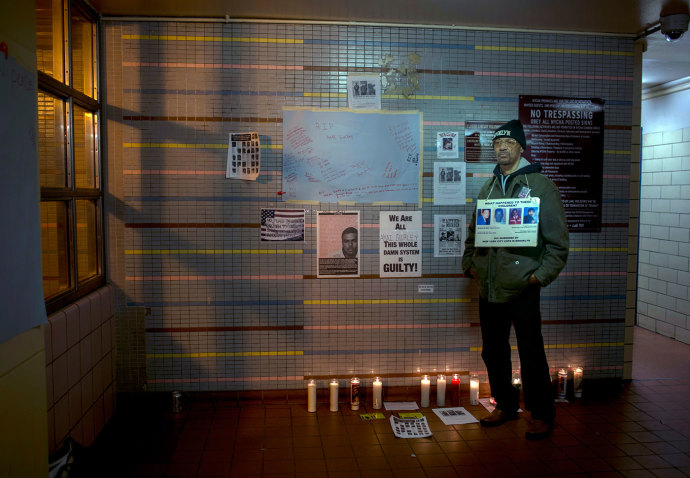
Nicholas Heyward, Sr., stands in the lobby of the Louis Pink Houses, where, two days earlier, on November 20, 2014, the unarmed Akai Gurley was killed by a police officer in an unlit stairwell.
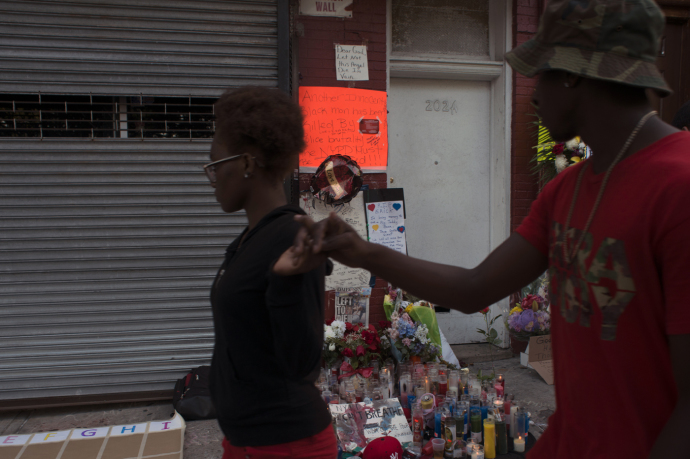
A memorial marking the site where Eric Garner died after being placed in a chokehold by an N.Y.P.D. officer in July, 2014.
January 31st will mark the twenty-fifth anniversary of the death of Jose Luis Lebron, a fourteen year old who was fatally shot by a police officer in Bushwick in 1990. The award-winning photographer Nina Berman had only just begun her career when she decided to cover the story. “His was the first funeral I ever attended, and it was very emotional,” Berman told me. “The impact of his death was so visible in the faces of the people who attended.”
In the two and a half decades since, Berman has covered the aftermath of numerous other fatal police shootings in New York City, including those of Anthony Baez, Sean Bell, Ramarley Graham, Akai Gurley, Eric Garner, and Nicholas Heyward, Jr. (whose father, Nicholas Heyward, Sr., was the subject of a recent Talk of the Town piece). She told me that documenting how families and communities cope with these events has become a sort of necessity for her. “Family members—mothers, fathers—whose children may have been killed ten, twenty, fifty years ago show up to these events . . . and feel this compulsion to explain that what’s going on is wrong and that justice has not been served,” Berman said. “I feel a responsibility to do whatever I can, to make this experience known.”
Nina Berman’s work is currently on view in the “Respond” exhibit at Smack Mellon.
>via: http://www.newyorker.com/culture/photo-booth/aftermath-police-shootings?intcid=mod-yml