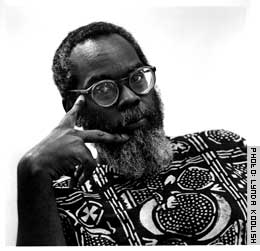


C. Liegh McInnis
Other Diasporic Voices:
C. Liegh McInnis and Reginald Martin
The following is an interview conducted by Dr. Reginald Martin’s Graduate English class, Black Writers from 1989 to the Present.
Students interviewed C. Liegh McInnis on October 18, 2012, regarding his essay, “Did Einstein, Like Prince, Run Out of Hits?” and his collection of poetry, Da Black Book of Linguistic Liberation.
All students are graduate students in the Department of English, African American Literature Concentration, at the University of Memphis (TN).
C. Liegh McInnis is an instructor of English at Jackson State University, the publisher and editor of Black Magnolias Literary Journal, the author of seven books, including four collections of poetry, one collection of short fiction (Scripts: Sketches and Tales of Urban Mississippi), and one work of literary criticism (The Lyrics of Prince: A Literary Look at a Creative, Musical Poet, Philosopher, and Storyteller). He is also the 2012 First Runner-Up of the Amiri Baraka/Sonia Sanchez Poetry Award sponsored by North Carolina State A&T. McInnis’s work has appeared in Bum Rush the Page: A Def Poetry Jam, Sable, New Delta Review, The Black World Today, In Motion Magazine, MultiCultural Review, A Deeper Shade, New Laurel Review, ChickenBones, Brick Street Press Anthology, Oxford American, Journal of Ethnic American Literature, and Red Ochre Lit. In January of 2009, C. Liegh, along with eight other poets, was invited by the NAACP to read poetry in Washington, DC, for their Inaugural Poetry Reading celebrating the election of President Barack Obama. He has also been invited by colleges and libraries all over the country to read his poetry and fiction and to lecture on various topics, such creative writing and various aspects of African American literature, music, and history.
Professor Reginald Martin: In preparing for the lecture/interview, I could not help but notice that Einstein’s big four articles (photons, gravity, space and time, relativity) all published in 1904, which would have made him 25. Equally notable, Prince’s biggest selling and award year (for Purple Rain, for which he not only had 3 million album sales but also won an Oscar, several Grammys, and had the number one movie and number one single), was 1984, which would have made him 26. So my question is, why not just quit at the top of your game? Greta Garbo quit in 1941 at 36—(and says she wanted to quit in 1930, which would have made her retirement age 25)—quit at the top of her game and never came back. Or is it that they were all so young, they did not know when or if they had hit the “top of their game”?
Professor C. Liegh McInnis: The answer depends on what one wants from life and from their art. Einstein, Prince, and Newton are the rare lucky or blessed people who realized early what they love to do and had the fortune of doing it for as long as they wanted. So, I don’t think that the concept of reaching the “top of their game” ever occurred to them because they fundamentally see themselves as students of their craft, so there is no ceiling for them. Secondly, innate or organic to their love for their work is arespect for their work, which means that are always striving to become better so, again, the notion of achieving “the top of their game” is something, for them, that can’t be measured until they die because every day they are working to do their best. And, of course, this is proven by the fact that Einstein and Newton were working to solve questions of the universe until the day they die(d), and Prince, while no longer having mass popular appeal—a statement I make based on his record sales even though he still sells a high volume of concert tickets—is still just as passionate about the music he creates and the messages he articulates, regardless of whether or not a mass audience wants to hear either.
RM: Is it difficult to mix discussions of high art and popular art?
CLM: I rarely think of art in terms of high and popular but n terms of one’s use of artistic device. However, I will say that I can differentiate so-called high (academically studied/celebrated) art and popular art by the notion that high (academically studied/celebrated) art is studied and celebrated as much, if not more, for the skill, craft, and form used to articulate the subject matter. [Yet,] those who study and celebrate popular art seem mostly to be concerned about the effects (catharsis) of the art and not so much about the skill, craft, or structure of the art. Now, of course, that’s not true in all instances, but in most cases the study and celebration of high art is as concerned with whether there is some teachability in “how” the art does what it does as well as with “what” the art does. In my own engagement of art, particularly literature, I am equally concerned with the “how” of the art as well as with the “what” or “why (meaning)” of the art, and I use that ideology and process no matter the art that I am engaging. So whether I am studying the fiction of Richard Wright, the poetry of Natasha Trethewey, or the lyrics of Prince, my goal is to examine how their skill allows them to produce art that affects how the receivers understand the subject. Additionally, the one thing that I like to make clear is that it isn’t the subject matter that may make something high or low art, but it is the manner in which the artist addresses the subject matter that will have the most influence on whether something can be perceived as high or low art. For example, the subject or topic of sex does not determine whether a song, or poem, or book, or film, or painting is high or low art but the manner in which the artist uses one’s skill to discuss sex will greatly determine if one has created high or low art.
RM: What are your writing catalysts for doing so?
CLM: I’ve tried to study people, such as you, Richard Wright, Margaret Walker, Jerry W. Ward, Kalamu ya Salaam, Toni Morrison, James Baldwin, Charlie Braxton, Nikki Giovanni, Sonia Sanchez, Chinua Achebe, Prince, James Brown, George Clinton, Larry Graham, Thomas Dorsey, Lucile Campbell, and others. These writers, among others, are often engaged in linguistic liberation where they take what the ruling class has deemed as insignificant and unworthy of study or praise and show how the culture of the oppressed is just as, if not in some cases more, humane as the ruling class. In doing this, they are, of course, reclaiming the humanity of the so-called wretched of the earth. My only problem with much of the current urban literature and music is that in many cases, not in all, the goal is not to engage in linguistic liberation but to justify wrong for wrong or evil for evil or just to say, to hell with it all and let’s embrace nihilism. And the embracing of nihilism was never the tradition of African American art. On quite the contrary, the refuting of nihilism and the reclaiming of the beauty and humanity of African peoples was the tradition and goal of art by African peoples.
Danielle Littlefield: As you have discussed in various articles and lectures, the Spoken Word scene offers such a strong lure of the immediacy of performance praise and, I think, also allows some writers, who no doubt can articulate insightful points and images, to bypass the complications of “writing to be read”. This problem, especially in light of the rise of “urban/ghetto lit” is nearly identical to that of the young black southern fiction/nonfiction/critical, except that right now we don’t have a “scene” to which we can belong. Also many of our “middle-class” counterparts feel just as threatened by intimate portraits of complex, deviant, or “ghetto” (ratchet) black characters, and as you pointed out, feel more interested in money-making ventures and advice books. Where do you think fiction/nonfiction/critical essay writers fit to the conversation/movement of the Artists of the New Black South?
CLM: All three types of writers, like the poets, are still working to impact what is defined as the aesthetic of the New Black South. As I assert in my essay “The New Afro-Mississippi Writers,” the one thing that all contemporary Afro-Mississippi and Afro-Southern writers must do is force both southern and national readers to realize and embrace that the south is diverse geographically and culturally. That is—Mississippi Delta culture is somewhat different than Central Mississippi Culture. And, of course, Mississippi Gulf Coast Culture is somewhat different than the Delta and Central Mississippi. The disservice that has been done to Mississippi and the South is that we have allowed New York, Chicago, and Los Angeles to define and maintain the South as a flat, one-dimensional place with flat-one-dimensional peoples and problems. And, of course, in many cases, writers are often forced to mold themselves to this stereotype to get published or they are forced to reject what it means to be a Mississippi writer and embrace East Coast minimalism to get published. This is why it is important for multiple literary magazines and journals that publish Afro-Southern writers to exist so that there can be a real discourse about the New Southern Aesthetic by the writers who live in the South.
Furthermore, all African American writers, regardless of genre, must learn to navigate or combine three or four aspects: the writer’s own interest and aesthetics, the tastes (aesthetics) of the target readership or market (whatever the writer defines as the target readership), the signing and marketing trends of the major literary world, and how one can develop one’s own readership. Thus, writers of fiction/nonfiction/critical essay are in a marginally better position simply because the reading (purchasing of poetry) is such a niche market, in fact as I say a niche of a niche market. Yet, African American and Afro-Southern writers of fiction/nonfiction/critical essay still have limited access to the being signed and promoted by major publishers, but it is better than, say, fifty years ago. But, what will continue to hinder all African American writers is if we continue to wait until the so-called major publishers and universities treat us equal to white writers. What we must do is be more proactive in creating our own readership and publishing opportunities.
RM: Can you discuss an example of African Americans developing institutions or organizations to create and enhance publishing opportunities?
CLM: Both Callaloo and Cave Canem come to mind. What many people don’t know about Callaloo is that it was initially established to publish burgeoning or unknown African American writers. This is also why I respect Cave Canem. The founders saw a need, developed a plan, and have produced wonderful opportunities for African American writers. Now, some will argue that both have now become just as institutionalized or elitist as the publishers and universities that drove them into existence, but they are still two of the few entities, along with African American Review and Obsidian, that create a pipeline for African American writers to a wide readership. A good example of this is the publishing and success of The Help. The problem that many African American writers and readers have with The Help is that it seems to affirm the notion that the African American story cannot be told to a wide American audience unless there is a white protagonist to offset the white antagonists. So, one wonders if an African American author could get a publishing and film deal for a book on the same topic as The Help but does not feel the need to show how a white person helped the downtrodden African Americans.
Most people don’t know that one of the hurdles to getting the 1995 film, Panther, produced is that some executives wanted Melvin Van Peebles to include some white Panthers. I always love David Letterman’s response to learning that information: “There were no white Panthers; are you kidding?” So, the biggest hurdle facing all African American writers, regardless of genre, is that we have yet to take control of the vehicles that determine the publishing and distribution of our art.
DL: Do you feel antagonism between black spoken word artists and black “writers”?
CLM: Antagonism may be a strong word because it depends on the individual desire and level of writing of the writer. For instance, there are several writers who identify as spoken word artists who are just as knowledgeable about literary device as those writers who identify themselves strictly as writing to be read and published. And, there are just as many writers who are mostly if not exclusively concerned with writing to be read and published who are also outstanding in presenting their works orally. I find that most negative feelings occur with two situations. Often African American poets who have the ability to master and incorporate literary device and colloquial African American culture find themselves marginalized by the literary establishment. This, unfortunately, may cause some of these writers to misdirect their anger toward spoken words artist for “lowering” the quality and standards of African American poetry and causing all African American poets to be shackled with the burden of being perceived as lesser artists instead of correctly aiming that anger at the myopic, if not racist, attitudes of the literary establishment. What I have also experience as a publisher of a literary journal is that some writers who define themselves as spoken word artists do not care to develop the mastery of certain literary devices needed to make the work effective on the page and charge the journal that rejects their work as racist, if white owned, or sell-out, if African-American owned. But, for the most part, I have been fortunate to meet people who have made a conscious decision to be what they are and accept the pros and cons of that decision.
DL: Have you noticed a move in Creative Writing Programs to admitting more black students in poetry than in other genres?
CLM: Since I don’t have the numbers, I don’t want to make a sweeping generalization. The numbers are, of course, easily accessible, but I haven’t studied them for about three years now. Even though I write and publish both poetry and fiction, my students tend to be mostly poets so I’m concerned with getting those that desire admitted to Creative Writing Programs. And, as I peruse the websites of creative writing programs, it seems that an equally low number of African Americans serve as poetry and fiction faculty. There are, of course, African Americans that do chair a few creative writing departments. So, I have not noticed that African American fiction writers have a more difficult time than African American poets; I think they have an equally difficult time for two reasons. One, white children who develop a love for writing have more pipelines to creative writing schools than African American children who develop a love for writing because their middle school and high school teachers tend not to have direct access or strong relationships to college creative writing faculty and because hip hop, spoken word, and acting are perceived as more viable career opportunities in the African American community than a career in creative writing. And, two, returning to what I said earlier, the lack of African Americans taking control of their publishing and distribution opportunities leads to less access to a career in writing for younger African Americans.
DL: How can Writers of the New Black South go about forming literary work-shopping communities, ones that connect us across states, particularly Mississippi, Louisiana, Alabama, Georgia?
CLM: First, we must stop planning to meet and just start meeting. And, in the process of establishing a date to meet, cast a wide net by informing as many people as possible from all walks of life about the meetings. Next, be willing to have honest conversations about the aesthetics of the workshop groups (especially what each writer wants or needs from the group) as it is being developed so that all people will know what the group expects and be dedicated to meet regularly. Most workshop groups fail, not because of aesthetic differences, but because the group just isn’t dedicated to meeting. I am fortunate that I have two wonderfully creative sisters, one with a PhD and one who is an icon in black revolutionary activism, who form the core of our creative writing group. Others come and go, but the three of us are dedicated to the work of writing, and we respect each other because we have spent a few years building knowledge and trust with each other.
Cecily Littlefield: Returning to our discussion of Einstein and Prince, is it the newer generation’s responsibility to keep the artist/scientist from “othering” themselves?
CLM: This is the innate responsibility of all artists and scientist by taking steps or developing a process that helps the mass of society to be knowledgeable of what they do. Often, artists and scientists other themselves because we need to isolate ourselves to work. And this model worked/works well for those scientist and artists who gain the support of so-called major universities, government support, and corporations (entertainment/medical/technological) as the universities, government, and corporations act as liaisons for the scientists and artists because, of course, the universities, government, and corporations will earn money from their creations. So, this traditional model has made most people seeking to be artists and scientists either lazy or elitists about the need to engage and inform the mass of society how and why what they do is important. So, those artists and scientists who do not gain the support of universities, government, and corporations have a greater risk of being othered because they, for many reasons, do not embrace the responsibility of making the mass of society knowledgeable they are doing.
For example, I was dragged kicking and screaming into the world of open mic. Before I met the wonderful poets, David Brian Williams and Jolivette Anderson, I never had much desire to do anything other than submit poetry to journals. Yet, our process of developing a very popular Saturday night open mic event that averaged about 150 people a night for four years included the development of weekly writing workshops and a book club. In fact, our open mic night was not the end of several means; it was a means to an end, which was developing quality writers and a readership that would purchase the books of these writers. An unexpected aspect of our weekly workshop and book club meetings is that our audience not only became as sophisticated in literary device as the writers; they became, in a few cases, intolerable of what they perceived as poor writing to a point where we, the writers, had to remind them, the audience, that this is open mic, and part of open mic is to create a space where beginning writers can grow. During an actual open mic night as a few members of the audience were a bit disrespectful of one frequent presenter who always read the same poorly crafted sex poem, I had to remind them that we had designed our open mic as a place where writers would feel free to express themselves so that they could develop their skills. After making that statement, a female from the audience stated quite forthrightly, “Then, he needs to take his ass to them workshops y’all be having cause his shit is terrible!” There was an explosion of laughter, and all I could do was announce the next poet. That moment affirmed for all the writers that an informed or astute audience forces the artists to remain sharp.
CL: Are you arguing that the artist must learn to coexist in the periphery, and the new generation should remain relevant and continue to grow in their genre?
CLM: I am arguing that artists and their audiences must understand that they exist in a circular relationship where the audience must be educated or knowledgeable of what the artist is doing or is attempting to go so that the art form does not become continues to meet the needs and wants of the audience, and does not die or become perverted by outside forces.
Melanie Barnes: What is a possible solution for innovative artists, such as Prince, to retain their relevancy in pop culture and maintain a consistent output and significant reception of their message through music, without “mainstreaming” (pop) their music? Or, is that at all possible, as most of the music is purchased by a younger audience?
CLM: While I think that your second statement that most music is purchased by a younger audience answers your first question, I think that a possible solution to innovative artists not remaining relevant in pop culture is to modify how we teach arts in our schools. There are two reasons why it becomes difficult for innovative artists to become or remain relevant in pop culture. One is the differing sensibilities, needs, and wants caused by the generation gap; however, the second reason is a bit more calculated. Most entertainment corporations are so concerned with earning money that they will seek and support art that is a product of poor quality craftsmanship or sophistication because it is a cheaper investment. This ensures that the art will appeal to a wider audience because corporations know that mass society has not had the access to the formal study of artistic technique, which lessens their respect and liking of certain artistic techniques. For instance, while I’ll admit that I may be the least hip – hop person I know, I do realize that NWA’s Straight Outta Compton (1989) is one of the best and worst things that happened to hip – hop. As a smart, funny, and well – produced record it shows that young, poor African Americans could still generate art that can be socio-politically relevant and earn money. Since “America eats its young,” as George Clinton so eloquently told us, Straight Outta Comptonalso signaled to entertainment corporations that for minimal investment the art of poor African Americans could be co – opted into a cash cow and that even more money could be earned if the art is less intellectually challenging and more focused on base physicality. Thus, the second NWA record as well as much of what followed in the genre was not as smart or potent in its ability to entertain and uplift.
Amber Hendricks: What role does the linear concept of time play in your thesis? For example, using the texts of art and science, might Prince and Einstein been unable to resist the chronological limitations of Time? So, Prince and Einstein didn’t so much run out of hits, as they may have run out of time?
CLM: While I don’t perceive time as a limitation, per se, I do recognize that time—the act of living—affects us all. So, I don’t think Einstein’s or Prince’s issue is about resisting the chronological limitations of time as they both continued to work diligently well after their forties – Einstein into his seventies and Prince [so far] into his fifties. The notion of either running out of hits is more so about the manner in which they are perceived after they make a conscious decision to use religion as an aspect of how they understand the world. So, it is not so much time that has affected them as it has been how those who once appreciated their work now have a lessened appreciation of their work. Why? A lot of those people have a low or negative regard for how religion or metaphysical engagement affects one’s intellectual development and/or ability.
AH: In response to these limitations, do both Prince and Einstein turn to religion to give greater meaning to their conflicted theories?
CLM: Yes. One of the points of my essay is that Newton’s and Einstein’s engagement or exploration of religion and/or the metaphysical is only natural for them given that they are men who think that everything must be explored to learn as much as they/we can about the universe. So, again, while some have admonished Prince’s and Einstein’s foray into religion, I think that it is only natural for these types of thinkers to look under every rock, so to speak. This is also true of Prince. Years before he becomes a member of an established Christian denomination, he was already questioning why secular philosophers were always more highly valued or regarded than spiritual philosophers. As he states in an interview from 1983, “I always laugh when people complain that my ‘message lyrics aren’t specific. Where has all the ‘specificity’ of Mao or Marx, Franklin or Jefferson, or even Plato and Aristotle gotten us? True philosophy need be no more specific than ‘live and let live’. The New Breed are people who know how to do that.”
Dylan White: You write that the scientist feels pressured to contribute to the “evolution” of his or her field, which does not necessarily create an improved destination. How does this affect the artist? Is all artistic creation the result of pressure from somewhere?
CLM: Let me begin by stating that pressure is based on or defined by what one accepts as pressure. One of the basic problems of living in a world based on the exchange of cash for goods and services is that at some point one must decide if what one likes to do will allow one to earn enough money to survive. This conundrum also creates the problem of scientific and artistic ethics. That is—the moment a monetary value is placed on something, then there is a question of what one will do to earn the money associated with this good or service. Unfortunately, for both scientists and artists, it is difficult for one to reach one’s scientific or artistic potential as long as one’s scientific and artistic endeavors are just a hobby.
CLM: A hobby is usually something done after one has completed one’s higher priority duties, such as working job that pays the mortgage and meets the other needs of one’s family. Thus, one who wishes one’s life long work to be in science or art must eventually try to find a job that will allow one to concentrate most of one’s time and energy to the development of one’s scientific and artistic abilities and ideals. But, the fortune of being able to work as a scientist or an artist does come with some pressure because the pressure of accomplishment (discovering something, inventing something, creating salable art) is related to monetary gain, so both the artist and scientist are often forced to be cognizant of the investment made by the company, which does add a certain amount of pressure. As Prince stated his attitude when creating his third album, Dirty Mind, “The first two albums were for the record company to prove that I could write hits. Dirty Mind is for me.) It is not that Prince wasn’t proud of his first two albums, both of which have some really great songs, but Dirty Mind feels more unencumbered and mixes genres even more freely than the first two as well as being more defiant about Prince’s theme of the liberation of the individual. So, one could raise the question of whether or not the pressure to create salable records limited Prince’s creativity on the first two albums.
But, let me add that all pressure isn’t bad pressure. In many cases, if not most, the pressure from corporations to develop a good or service that can be marketed to the masses can be a good thing. It can keep both artists and scientists from becoming self-absorbed or simply engaging in science and art for the sake of itself, which while both can be appreciated aesthetically, rarely has any tangible and constructive manifestation on humanity.
DW: Why has the notion of “cool” in popular culture never reached scientific theory except in rare cases such as Einstein?
CLM: I think the answer returns us to my statement about how art and science are taught in school as well as in the household. As long as schools as early as first grade continue dividing and tracking students based on academics, there will be a social divide between the societal mass and those who have been considered the academic elite since first grade. Since popular art is marketed to the societal mass, most of whom were not enrolled in the advanced classes or college prep classes, the academic elite will always be seen as the odd other—not always in a bad way, per se, but to “other” someone often does give people a negative perception of that person and what that person does. Think about something as simple as the relationship between Carlton and Will in The Fresh Prince of Bel-Air; how many times is Carlton portrayed as right or cool? So until, again, the concept of what is deemed cool can be effectively challenged by how science is presented in schools, homes, and churches, most scientists will never been perceived as cool. Society will continue to suffer because humanity will not be able to gain as much as it could or even democratize scientific pursuit because of the limited amount of children taking interests in a lifelong endeavor in some aspect of science. If we can develop more programming, such as ESPN’s Sports Science that incorporates scientific inquiry into daily life, then we can improve this situation. Still, I am amazed at how many teachers from all disciplines are unable to relate their discipline to daily life, which shows that far too many teachers view teaching as a job and not as a lifelong passion. Their disappointment or disillusionment with the profession, perhaps, has caused them to lose that passion, which can push them to help their students understand how the discipline correlates to life. So, again, until we are able to change how science and scientists are presented in schools, homes, and churches, science will continue to be perceived as the field for the elite.
DW: You place great emphasis on absence from the radio and charts as a measuring stick for musical success. Do niche music blogs and the rest of the Internet’s offerings change this perception?
CLM: It is not so much my emphasis as it is still the manner in which most of society judges the success or failure of a song or album based on radio play and chart positioning. For instance, Prince has a song, “Rock-n-Roll Love Affair,” that is not available for purchase but is on the charts in Europe simply because of radio play. I do think that with the advent of music blogs and other Internet offerings both the corporations and the patrons of the art are being forced to redefine successful art is. We forget that the music business was suffering financially until it was literally saved by the success of Michael Jackson’s Thriller, which had a domino effect on the sales of other artists. So, we are at a moment in history where everyone involved – the artists, the music companies, the patrons, and the industry of music criticism – are all struggling with how to define and identify a successful record. Prince, to his credit has decided that none of the current venues or vehicles works for him, which is why he does not allow his videos on YouTube.com and why he has been waiting to release another record. And, while he has established his own website, 3rdeyegirl.com to sell most of his new songs, he sparingly uses iTunes, throwing them a bone just to maintain some semblance of a presence to the wider audience.
DW: You write that the separation of new from old could distort a work of genius. If visionary work is by its definition ahead of its time, is this an inevitability that we must wait out as a culture that grasps high art at intermittent times? If not, how can we separate works of genius from transient definitions of popularity?
CLM: Often what is deemed ahead of its time is something for which the audience wasn’t prepared because they weren’t properly educated in the artistic form or weren’t engaged in as close a study of the art form as the person who created the art that is deemed ahead of its time. Making this statement, I must be clear that I don’t believe in the notion of “special people.” I think that we are all given certain gifts, and with equal and proper education we can all use our gifts to make varying and equal contributions to the world. Additionally, when a work is created that is later deemed to have been ahead of its time, there were some who understand and appreciated the art even when it was first released. So, the question remains why did those few “get it” and not the masses, especially if later it becomes regarded as well-crafted by the masses. Often the gradual acceptance of and appreciation of the art that was deemed ahead of its time occurs as more people gain better understanding (either culturally or academically) of the art. Again, because the artist often has greater/more exposure to the artistic form and the cultural landscape, the new art is simply projecting or predicting what the next change or shift in aesthetic tastes will be even before the patrons realize this change or shift. So, my response is that if we do a better job educating the masses there will be less work that will be considered ahead of its time because the mass of society will be ready for, if not anticipating, the next idea.
As for your last question of separating works of genius from transient definitions of popularity, we must remember that one man’s Aretha Franklin is another man’s Li’l Kim, and one man’s Toni Morrison is another man’s Zane. Furthermore, the lasting popularity of something is not just based on the objective notion of one’s mastery of artistic device. The lasting popularity of something also relates to the closeness of sensibilities from one generation to the next.
Sherri Kilpatrick: Considering your essay, “Did Einstein, Like Prince, Just Run Out of Hits?,” do you think that artists are less revolutionary with age because of the lessons learned through experiences that weigh on their hopes and dreams?
CLM: Not necessarily—I think that if one properly educates oneself while remaining physically and intellectually active in one’s field one will become wiser and learn to work smarter and not harder. I think that unfortunately what we so often deem as revolutionary is just sensationalism or a sensational act. Sometimes, the most revolutionary act is an act of silence or the decision not to jump on the bandwagon of the next big thing or movement. For instance, the most revolutionary thing that African Americans can do is raise our children because poor parenting is eclipsing the power of racism in keeping African Americans as perpetual second-class citizens. So, we can march, give fiery speeches, and “call out” the Man, but if we don’t do a better job of raising our children we will continue to be second-class citizens.
SK: How do you feel about the integrity of popular music in comparison to artists such as Prince?
CLM: The integrity of popular music is no different today as it was ten, twenty, fifty years ago because the integrity of the people who own the music corporations has remained the same. They are and have always been, for the most part, exploiters; however, two things have changed that improve the exploiters’ ability to exploit the art form. One, the Reagan educational cuts that led to the severe reduction in the arts within public schools is the greatest impediment to the Funk movement and to the musicality of African American popular music because African American youth no longer had free formal music training. While African American genius allows African American youth to turn the turntable into an instrument, African American musicians have struggled in regards to popular music because the patrons of popular music are not interested in sophisticated musical compositions. Two, the rise of the crack epidemic along with the Reagan polices that led to record highs of African American unemployment, poverty, and incarceration of African American youth created a cultural acceptance of nihilism within the African American community that had never been accepted before. Thus, corporate exploiters are in a better position to do what they have always done because more African Americans are without hope for a better future.
SK: Is the idea that religion hinders creativity an attack on the artist and/or scientist or an attack on religion?
CLM: The negative criticism of Prince, Newton, and Einstein for engaging religious pursuits is definitely an attack on religion even though it is often presented as an attack on their creativity, and that was one of the driving reasons why I was moved to write the article. I think that it is important to refute the lie that people who believe in the existence of a god are somehow intellectually inferior to those who do not believe in a god. As I ask in the article, did Newton’s belief in a god keep him from inventing calculus?
Elizabeth Allen: Is this backlash or fan-abandonment that Prince is experiencing specific to artists that did something new or developed a sound or way of making music that is different from what others were doing at the time they received that “icon” status?
CLM: Yes, the same thing happened to Bob Dylan when he embraced Christianity. It also happened to Jimi Hendrix when he disbanded the Jimi Hendrix Experience, replacing his white bassist and drummer with an African American bassist and drummer to form the Band of Gypsys. Again, because the mass of society is usually not developed to be critical thinkers who can engage complex ideas, most people want their art to be flat and one-dimensional. So, change, particularly an ideological change or an aesthetic musical change, usually means a death blow to one’s popularity. There are a few exceptions, such as The Beatles, but in most cases patrons of popular music want flat and one-dimensional art because it keeps them from having to think.
SK: In relation to your book, Da Black Book of Linguistic Liberation, what are your thoughts on the editorial practices of various labels that require notification labels of sexual, violent, and explicit material and/or that censor material with many positive/ uplifting messages? How do such editorial practices alter the dynamics of the black community and education and/or the lack thereof?
CLM: On the one hand, I am not opposed to a system that informs parents and all of us of the content of a work of art. On the other hand, as a Black Nationalist, I view this not so much as what others have the power to do to African Americans but what African Americans allow to be done to them. Why do I say this? We have not created enough of our own entertainment corporations and have not properly engaged and supported the ones that are or were African-American owned. For instance, most people don’t realize that New Jack City and The Five Heartbeats were both released in March 1991. I was a college junior at the time, and I am one of the few people that I know who went to see both films with most of my friends opting to see only New Jack City. Of course, The Five Heartbeats is pulled from theaters early because of a lack of support. So, white executives feel comfortable saying that African Americans do not want positive, loving, peaceful images of themselves, especially as it relates to African American men. So, the power lies with African Americans, but we continue to misuse or not use that power in a way that forces corporations to provide balanced imaging of African Americans.
SK: Did the Black Aesthetics Movement have it right, or at least partially right, in its attempt to set standards for Black artists, when considering the current message to appreciate monetary gain over all else including family?
CLM: The Black Aesthetics Movement had it exactly right in this regard, but as any humanly created movement it was fighting both internal and external issues. Internally, the artists, especially the writers, who subscribed to this notion, could have done a better job creating room for a wider variety of African American writers. Now, to be clear, they were not acting as the “thought police,” but they could have done a better rhetorical job extending the welcome mat for African American writers of all ideologies. The even larger hurdle was the notion that white corporations were willing to pay top dollar for negative images of African Americans or flat, one-dimensional images of African Americans. Regardless of what one believes to be the best or most effective manner to create art, it is always useful to have the discussion, which is what the Black Aesthetics Movement did; it forced people to discuss and think more seriously about how art impacts the ideology and behavior of people. I was also trying to get readers to understand the manner in which art impacts how people perceive life and behave based on that perception with my essay “Witches, Bitches, and Niggers,” which is published online by In Motion Magazine(http://inmotionmagazine.com/ac12/cliegh_witches.html).
SK: It seems that the Black Aesthetics Movement figures prominently in your ideology. What authors did you favor growing up?
CLM: From first to eight grade I read anything about sports and cowboys. But, when I transitioned to high school it was Richard Wright, James Baldwin, Toni Morrison, Amiri Baraka, Sonia Sanchez, Nikki Giovanni, Zora Neale Hurston, and any literary journal I could find. My father kept lots of journals, so I loved to read them when I visited him during the summer.
SK: Why do you mention Charlton Heston in two separate poems “[i] Can’t Dance (The Middle-Class African American Blues Song)” and “This is not a Protest Poem”?
CLM: Like Ronald Reagan he was, at that time of writing the poems for Da Black Book, the symbol for all things white and supremacist, particularly as the spokesman for the NRA.
EA: When such artists and scientists as Prince and Einstein, who are largely defined by those first and extremely significant impressions, cannot get recognition or appreciation for their later work, who loses the most, the artist/scientist or the audience? If these industries are operating on a sense of supply and demand, does the artist/scientist get to “break free” of those kinds of shackles and explore their creativity thereby giving the audience even more unique and interesting material? Or, is such an approach ultimately stifled by the lack of support and publishability/producability, as you suggest, forcing the artist to let the “oldies but goodies” suffice?
CLM: If the later work is not appreciated because the audience is either not intellectually prepared for the work or because the mass populous is mentally closed to the idea of the work, then everybody loses because society misses an opportunity to engage new ideas. Additionally, future artists are taught that it is best to be safe and earn money than to be experimental and broke; however, it also is about supply and demand. Ultimately, audiences have a right to vote with their spending power. So, the issue, other than how does society do a better job developing the artistic or aesthetic knowledge of the mass, is how can society create more artists who make decisions based on fulfilling their creative impulse rather than filling their bank accounts? When I got to work with Prince on a book he was considering writing, he stated two things to me that have remained with me. One, “Artists get the fans they deserve not the fans they want.” So, an artist can either spend one’s time mindlessly or robotically giving the industry and the patrons what it wants, or an artist can spend one’s time trying to navigate the industry and patrons by making sure that the patrons understand what one is doing.
If patrons understand what the artist is doing and they still reject it, then both have fulfilled their responsibility to use art as a tool to improve society. Prince also stated, “How much money does one need to finally do what one wants?” While this seems like an easy question, we must consider that how living in a cash exchange society without much cash to exchange can cause one to make decisions based on physical survival rather than aesthetic and metaphysical fulfillment. So, this is also a parenting and academic education issue of how do we raise our children. What values do we give our children from birth that helps them to make the choice between money and their soul? You can’t pimp me if I don’t want what you have, but I must be educated to enable the knowledge that what I have—my dignity and freedom—is more important that the money and fame that you can give me. And, if I know that my dignity and freedom are more important than the money and fame you can give me, then I am less likely to pervert myself or make myself a slave to obtain the money or fame.