
January 04, 2011
The largest slave revolt
in U.S. history is commemorated
 By Littice Bacon-Blood, NOLA.com | The Times-Picayune
Follow on Twitter
More than a century before the first modern-day civil rights march, there was Charles Deslondes and his make-do army of more than 200 enslaved men battling with hoes, axes and cane knives for that most basic human right: freedom.

They spoke different languages, came from various parts of the United States, Africa and Haiti, and lived miles apart on plantations along the German Coast of Louisiana. Yet after years of planning at clandestine meetings under the constant threat of immediate death, they staged a revolt on Jan. 8, 1811, that historians say is the largest uprising of enslaved people in this country.
“Slavery was very harsh and cruel, but the slaves themselves were not mindless chattel with no aspirations and no basis for humanity,” said John Hankins, executive director of the New Orleans African American Museum. “This revolt demonstrates that there were people willing to make the ultimate sacrifices to better not just themselves but other people.”
A year of events planned
To mark the 200 year anniversary of that revolt, Destrehan Plantation, in conjunction with Tulane University and the African American Museum, located in Treme, is organizing a yearlong look at the uprising that reverberated around the fledgling nation because of the large number of enslaved people involved, its military strategy and oddly enough, because it demonstrated that all was not well among those held in bondage.
“I don’t think the United States as a whole understood that the enslaved black population were as unhappy as they were,” said Hazel Taylor, the special project coordinator at Destrehan Plantation. “Slave owners had a tendency to say that (slaves) were happy. What this did was put awareness on the people who were being oppressed.”

The revolt, which started in St. John the Baptist Parish about 30 miles west of New Orleans, also raised awareness of the harshness of the slave system and fueled the abolitionist movement, Taylor said.
It occurred just a year before Louisiana gained statehood and 50 years before Louisiana and 10 other southern states voted to secede from the union in favor of forming the Confederacy. One of the central issues driving the secession, historians say, was an attempt to keep slavery legal because of its huge economic benefits for farmers.
Still the battle remains largely unheard of outside historical circles, according to Taylor and others who hope the year’s events will change that.
“These were real people and we have many of their names and we hope to encourage people to continue to study these brave individuals,” Hankins said. “We want to provide the platform for a discourse about these moments in history and in this case a very important movement. What we want to do is put the Slave Revolt of 1811 into the national discourse to give it just due.”

David Grunfeld, The Times-Picayune / Art by renowned River Parishes artist Lorraine Gendron depicts the revolt by enslaved people in 1811 in St. John and St. Charles parishes that reverberated around the country. The art hangs in the Destrehan Plantation exhibit commemorating the 200-year anniversary of the revolt.
The series of commemorative events kicks off Saturday with the opening of an exhibit at Destrehan Plantation that features the art and sculpture of the revolt by local artist Lorraine Gendron and documents that give accounts of the uprising.
“It’s an introduction to the subject, a museum exhibit that you can walk through and get a whole picture of what happened,” Taylor said.
Uprising started on Woodland Plantation
While historians may differ on whether there was one specific catalyst for the uprising, the historical accounts of the events that unfolded on Jan. 8 are generally uniform.
It started in LaPlace on the Woodland Plantation, led by Charles Deslondes, the son of an enslaved black woman and her white owner.
Deslondes, along with more than 200 others known mainly by first names, were headed to New Orleans in the hopes of joining with other revolution-minded free and enslaved black people.
Historian Daniel Rasmussen spent two years researching the revolt as part of his senior thesis at Harvard University and has expanded his initial work into a recently published book, called “American Uprising: The Untold Story of America’s Largest Slave Revolt.”
He is scheduled to discuss his book Friday at the LaPlace library and Saturday at the East Regional Library in Destrehan.
According to Rasmussen, the revolt had been planned for years and was “highly organized.”
“There were 11 separate leaders of the revolt, representing various different ethnic groups. In my book, I profile a few of these leaders, mainly Charles Deslondes, Kook, and Quamana. Kook and Quamana were Asante warriors brought over from Africa a mere five years before,” Rasmussen said. “Charles Deslondes was the half-white son of a planter who had risen to the rank of driver, but was, actually, the ultimate sleeper cell, plotting revolt. These leaders took advantage of clandestine meetings in the cane fields and taverns of the German Coast, the slave dances in New Orleans, and the vast network of slave communications that extended throughout the Caribbean.”
Inspired by Haitian revolt
Rasmussen and other historians say the revolt was inspired by the 1791 events in Haiti where the enslaved population took over that island nation and abolished slavery. These revolutionists had similar dreams as they marched to the beat of drums and under waving banners toward New Orleans.
“These three men, each with different insights and abilities, had planned their insurrection and spread word of the uprising through small insurrectionary cells distributed up and down the coast, especially at James Brown’s plantation, the Meuillion plantation, and the Kenner and Henderson plantation,” Rasmussen writes in his book.
Along the way they burned plantations and crops and collected weapons and ammunition. Two white planters were killed; their wives and children were spared.
Rasmussen said his research, which included accounts from court records and the ledgers of some planters, held some surprises for him.
“I realized that the revolt had been much larger — and come much closer to succeeding — than the planters and American officials let on. Contrary to their letters, which are the basis for most accounts of the revolt, the slave army posed an existential threat to white control over the city of New Orleans,” he said. “My biggest surprise as I dug into the sources was . . . . just how close they came to conquering New Orleans and establishing a black Republic on the shores of the Mississippi.”
Revolt came to tragic end in Kenner
But their dreams of freedom were not to be realized.
On Jan. 10 at Jacques Fortier’s plantation near present-day River Town in Kenner, the makeshift army was forced to turn back after encountering a detachment of military troops, but found their retreat blocked by a group of local militia organized by planters. The number of insurgents killed when they were forced back to an area close to present day Norco varies: Some say 40 to 66, but the end result was that the uprising was stopped in Kenner.
Historians say some survivors were able to escape into the swamps, while others were returned to bondage.
On January 13, 1811 a tribunal convened at Destrehan Plantation and after three days of hearings, 45 men were either sentenced to death or sent on to New Orleans for further trials. Those sentenced to death, among them Charles Deslondes, Kook and Quamaan, were executed by a firing squad and beheaded.
Their heads were stuck on poles and placed along the river levee from New Orleans to LaPlace in an attempt to discourage similar rebellions.
“”It was really brutally put down,” said Gwendolyn Midlo Hall, a New Orleans author and historian who is now an adjunct history professor at Michigan State University. “It was incredibly bloodthirsty in the way the elite put it down, cutting people into little pieces, displaying body parts.”
In 2000, Hall, 81, published a database on enslaved Africans in Louisiana compiled over 14 years that offers rare snippets of information on slaves, such as skills, ages and places of origin, frequently missing from historical documents.
And like many of those enslaved, Hall said the 1811 revolt has not received the historical attention of other seminal events.
“There’s been a historical amnesia about anything that showed a really bitter exploitation and violence directed on the slave and former slave population,” Hall said. “A lot of historians didn’t want to talk about it and a lot of the public didn’t want to hear about it. But that’s evidently changing and I’m glad I lived long enough to see it.”
Littice Bacon-Blood can be reached at lbacon-blood@timespicayune.com or 985.652.0951.
>via: http://www.nola.com/politics/index.ssf/2011/01/the_largest_slave_revolt_in_us.html
__________________________

July 1, 2013
New Orleans 1811 Slave Revolt
tour raises funds to
rebuild libraries in Haiti
by Leon A. Waters
A New Orleans based non-profit is working to rebuild libraries in Haiti. The organization is called Bibliotheque Parrainage (BP). It means Library Patronage. Bibliotheque Parrainage assists libraries in Haiti through the country’s National Library, Bibliotheque Nationale. Founded in 2011, the goal of Bibliotheque Parrainage is to provide resources to the National Library that will be of assistance to public libraries across the country.
Libraries in Haiti have operational challenges. Some of them do not have stable electricity to operate; some have unstable solar power; and others function in the evening when bursts of electricity become available. Besides the challenges of structural repair, which includes roof renovations, many of Haiti’s libraries are seeking fraternal assistance inside and outside the country.

Charles Deslonde, leader of the 1811 slave revolt, the largest slave rebellion in U.S. history
This includes opportunities to partner with the National Library in areas such as the sharing of periodical databases for use by all Bibliotheque Nationale patrons. This also includes partnership opportunities to enhance and upgrade staff and students in advanced librarian science, utilizing advance technological training and study. Creating the opportunity to bring staff and students to the United States to receive such training and study is critical to revolutionize the role that libraries can play in Haiti’s future.
During the July 4th weekend in New Orleans, Bibliotheque Parrainage is hosting a fundraising bus tour of the Louisiana 1811 Slave Revolt, the largest slave revolt in the United States.
Inspired by the Haitian Revolution, the revolt occurred in the parishes of St. John the Baptist, St. Charles and Orleans. The revolt was led by a former enslaved man named Charles Deslonde. The aim of the revolt was to abolish slavery and establish a free republic to be governed by the former enslaved people.
This educational adventure will retrace the route of the former enslaved rebels. The tour will enlighten the visitors on how Deslonde’s rebels carried out the revolt. The visitors will visit some of the locations where the slave rebels fought U.S. troops and militia and other locations related to the revolt.
The visitors will learn what happened, discover the gains made and the foundation laid for further revolts. A descendant of the rebels will escort the visitors to numerous stops where significant actions occurred.
Funds raised from this July 4th weekend adventure will be used for assistance to the Nationale Bibliotheque in Haiti. In this way, we who reside in the United States will extend a supporting hand to the Haitian people.
Schedule for the 1811 Slave Revolt Bus Tour
Join the 1811 Slave Revolt Bus Tour on Friday, Saturday or Sunday, July 5-7. Departure is at 9 a.m. with boarding time at 8:45 a.m. at 500 Canal St., in front of the New Orleans Sheraton Hotel. Visitors are encouraged to wear comfortable clothing and no sandals. The tour is approximately three and a half hours; tickets are $50 per person. Participants may go online to purchase tickets: www.bibliothequeparrainage.eventbrite.com. For more tour information, call (504) 432-9901.

“Deslonde Revolt 1811” – artist unknown
The president of Bibliotheque Parrainage is Ms. Valencia Hawkins, who is a recent retired librarian of 26 years of service from the New Orleans Public Library. Ms. Hawkins served the citizens of New Orleans in the official post as associate director of Central Public Services, Outreach and Programming.
Those in New Orleans know very well the role libraries can play after a natural disaster. Their natural disaster was Hurricane Katrina. The main library located in downtown New Orleans was mostly spared from the horrific damage that impacted most of New Orleans. Hence, the main library played a real critical role in the restoration of New Orleans. The library was a center for information, disaster relief assistance that included medical-health resources, housing-shelter resources and food-financial resources.
Funds raised from this July 4th weekend adventure will be used for assistance to the Nationale Bibliotheque in Haiti. In this way, we who reside in the United States will extend a supporting hand to the Haitian people.
Despite the living conditions of most of Haiti’s people, the Haiti people sent $40,000 to assist New Orleanians to rebuild and recover. Such a very poor country made such a humble sacrifice. Bibliotheque Parrainage feels that libraries assist in the building of communities; certainly, as Bibliotheque Parrainage expounds, those of us who reside in the United States can do more.
Louisiana’s heroic 1811 Slave Revolt
One of the most suppressed and hidden stories of African and African American history is the story of the 1811 Slave Revolt. The aim of the revolt was the establishment of an independent republic, a Black republic. Over 500 Africans, from 50 different nations with 50 different languages, would wage a fight against U.S. troops and the territorial militias.

1811 Slave Revolt – artist unknown
This revolt would get started in St. John the Baptist and St. Charles parishes, about 30 miles upriver from New Orleans. At that time, New Orleans was the capital of what was called the Orleans Territory. The revolt sought to capture the city of New Orleans and make New Orleans the capital of the new republic.
The principal organizer and leader of this revolt was a man named Charles, a laborer on the Deslonde plantation. The Deslonde family had been one of the many San Domingo slave holding families that fled the Haitian Revolution (1790-1802). The Deslonde family fled to Louisiana for refuge. In their escape, the Deslonde family brought their chattel property, Charles and others, with them.
The Deslonde family acquired land and restarted their slave holding sugarcane operations in St. John the Baptist parish. The ideas of slave rebellion had been inspired by the Haitians’ defeat of Napoleon and his allies, who included President George Washington. The victory of Africans in gaining their freedom in Haiti had a powerful and stimulating effect on Africans held in bondage all over the world, especially in the Western Hemisphere. It gave enormous encouragement to the Africans on plantations in Louisiana. To capture the city of New Orleans, Charles Deslonde’s strategy consisted of a two-pronged military assault.
One prong of the attack would be to march down the River Road to New Orleans. The rebels would gain in number as they moved from plantation to plantation on the East Bank of the Mississippi River from St. John the Baptist parish to New Orleans. They were intent on creating a slave army, capturing the city of New Orleans and liberating the tens of thousands of slaves held in bondage in the territory of Louisiana.
The other prong of attack was to involve the enslaved Africans inside the city of New Orleans in a simultaneous uprising. Here the rebels would seize the arsenal at Fort St. Charles and distribute the weapons to the arriving slave army. The two-pronged attack would then merge as one and proceed to capture the strategic targets in the city.
On the evening of Jan. 8, 1811, Charles and his lieutenants would start the revolt. The rebels would elect their leaders to lead them into battle. They elected women and men. The leaders were on horseback. Several young warriors marched ahead of them with drums and flags. Men and women assembled in columns of four behind those on horseback.

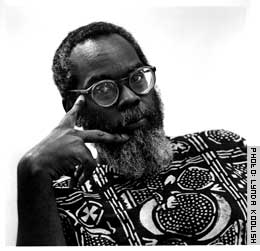
Author and historian Leon Waters speaks on the 1811 Slave Revolt, the largest in the U.S. He is descended from the rebels.
The rebels rose up on the plantation of Col. Manuel Andry (today the city of LaPlace) in St. John the Baptist Parish. They overwhelmed their oppressors. Armed with cane knives, hoes, clubs and a few guns, the rebels marched down the River Road toward New Orleans. Their slogan was “On to New Orleans” and “Freedom or Death,” which they shouted as they marched to New Orleans.
However, despite their best efforts, they were not able to succeed. The revolt was put down by Jan. 11 and many of the leaders and participants were killed by the slave owners’ militia and U.S. federal troops. Some of the leaders were captured, placed on trial and later executed. Their heads were cut off and placed on poles along the river in order to frighten and intimidate the other slaves. This display of heads placed on spikes stretched over 60 miles.
The sacrifices of these brave women and men were not in vain. The revolt reasserted the humanity and redeemed the honor of the people. The uprising weakened the system of chattel slavery, stimulated more revolts in the following years and set the stage for the final battle, the Civil War (1861-1865) that put an end to this horrible system. The children and the grandchildren of the rebels of 1811 finished the job in the Civil War. Louisiana contributed more soldiers – over 28,000 – to the Union Army than any other state.
These women and men of 1811 represented the best qualities of people of African descent. They were people of exceptional courage, valor and dedication. These were women and men who put the interest and welfare of the masses above their own personal desires. These were people who understood that the emancipation of the masses is a precondition for the emancipation of the individual.
The sacrifices of these brave women and men were not in vain. The revolt reasserted the humanity and redeemed the honor of the people.
Remember the Ancestors! Remember the women and men who carried out the largest African uprising on American soil.
Author and historian Leon A. Waters, publisher and manager of Hidden History Tours, chairman of the Louisiana Museum of African American History and descendant of the 1811 rebels, can be reached atleonawaters8@gmail.com. Bibliotheque Parrainage can be reached at bparrainage@gmail.com.