
NOVEMBER 16, 2013
Freedmen’s Children and
Racism in the Cherokee Nation

Rena Logan with her Cherokee Nation identification card. Photo courtesy of Sulekha.com
African and Native American peoples came together in the Americas because of colonization and slavery. Over centuries, Black people and Native Americans created shared histories, communities, families, and ways of life. They were joined in a struggle against prejudice, laws, and twists of history. Earlier in the colonial period some Native Americans were enslaved alongside Africans. Later on, select tribes harbored runaway slaves where intermarriage and the joining of cultures gave way to new and interesting communities of African American and Native people. There are still Blacks today who enjoy Indian citizenship and celebrate their mixed heritage, however, one group has been stripped of that right. In 2007 The Cherokee Nation decided to limit its membership to people who can prove they have Indian blood. This took away the citizenship rights of about 2,800 Black Americans who are descendants of slaves once owned by wealthy Cherokees.
The Cherokee settled in the southeast (Georgia) before they were moved, along with many other tribes, to Oklahoma during the Trail of Tears. Emulating wealthy white southern plantation owners of the time, the Cherokee actually purchased slaves to work their land. By 1861, there were 4,000 black slaves living among the Cherokee, a fact that has been overlooked in numerous historical records. 1866, the Cherokee Nation signed a treaty with the federal government that abolished slavery, and granted former slaves and their descendants “all the rights of native Cherokees.” Rights of citizenship include access to health care, food distribution for the poor, and assistance for low-income homeowners. This group became known as the “Freedmen.” The Freedmen had walked along side the Cherokee on the Trail of Tears and were listed on the Dawes Rolls, a list of names of Indian citizens who applied for enrollment in Oklahoma in the turn of the 20thcentury.
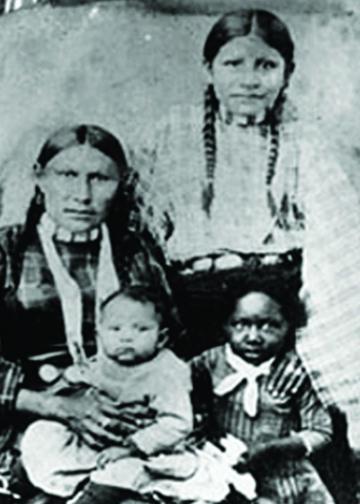
Native Americans were active participants in the American slave trade. Photo courtesy of Wikipedia.
Today the Cherokee Nation requires that citizens have an Indian ancestor who appears on the Dawes Rolls. This excludes those who were listed as Freedmen, even though most were of mixed Cherokee and Black heritage. In contrast whites that shared a Cherokee heritage, being unable to be “Freemen,” were listed in the Roll only as Cherokee making it much easier to keep their family names on the list. The Freedmen assert the Nation’s decision prevents more than 3,500 blacks from becoming Cherokee citizens. Marilyn Vann, who heads the Descendants of Freedman Association has noted that “the majority of folks who are members of the tribe … have lived lives of white privilege.” Many Cherokees are largely white and are “people who have never been discriminated against in their lives.”
Yet, the Nation has countered stating that they want to narrow the definition of Cherokee. “We want to remain an Indian tribe made up of Indians,” says Cara Cowan Watts, a member of the tribal council. About 1,500 Blacks have been able to keep their citizenship so far, however this will be difficult for many others who are unable to trace their ancestor due to the “one-drop-rule” used to categorize Blacks in this country.
by Xiomara Pedraza
JUST FOUND THIS IMPORTANT ARTICLE ON SOME OF MY CHEROKEES INDIANS FAMILY. HAVE STARTED MY RESEARCH AND IS SO VERY INTEREST .ALSO THESE ARTICLE I BEEN READING ARE FILLING OUT SOME OF THE MISSING HISTORY. I DID NOT KNOW ABOUT.WHERE THEY CAME FROM AND WHY THEY SETTLE IN THE STATES THEY LIVED IN. THE YEARS ARE FALLING IN PLACE. SINCE IT WAS A GAP BETWEEN SOME OF THE YEARS IN WHICH THEY DID SETTLE. NOW I CAN SEE WHY. THANK YOU FOR THE ARTICLE.