
SEPTEMBER 24TH, 2013
Kenya’s Westgate Mall Attack and
the Politics of Spectacular Violence

BY SAMAR AL-BULUSHI
The masked gunmen who stormed Nairobi’s Westgate Mall on Saturday did one thing right. In targeting a site at the epicenter of elite consumerism in the upscale neighborhood of Westlands, they galvanized worldwide attention. As the mainstream media offers us a play by play of the unfolding hostage crisis, and as my Twitter and Facebook newsfeeds are flooded with declarations of anger and sorrow–sentiments I of course share–two things are apparent.
First, the extent to which the more privileged and educated segments of our world community find certain forms of violence in certain locales to be horrifying and objectionable. Second, the classed and racialized framings that shape our understandings of the issue at hand. Together, these notions work to differentiate between human lives that are worthy of grief, and those that are not.
What is it about the targeting of innocents on islands of privatized leisure like Westgate that strikes such a strong emotional chord across the world? Is it not that the majority of us who (have the ability to) log in every hour for updates see ourselves in the victims, knowing that we regularly occupy these very spaces?
Perhaps it is in this vein that we can make sense of the deafening silence in the context of the transnational plundering of neighboring Somalia—a country that readers of the New York Times and Kenya’s Daily Nation have been conditioned to see as representing the antithesis of liberal cosmopolitanism, as requiring external tutelage in the name of ‘peace and stability’, and whose ongoing destruction is more commonly understood as the work of Somalis themselves rather than the product of a complex assemblage of internal and external actors with competing political and economic interests.
How is it that the presence and violence of certain actors in the region–whether the Kenya Defense Forces (KDF) and its African Union ‘peacekeeping’ (AMISOM) partners in Somalia, or US and Israeli forces ‘advising’ the KDF in Nairobi–is normalized in our collective imaginaries as legitimate, while exceptional violence by non-state actors against upper-class Kenyans and expatriates triggers such immediate outcry?
Just three months after its invasion of Somalia in October 2011, the Kenyan military reportedly claimed the lives of at least 700 Somali ‘militants’. UN reports have documented black market sales by peacekeeping troops of arms intended for the Somali government to oppositional groups including Al-Shabaab, and Human Rights Watch reports of indiscriminate mortar and rocket attacks by AMISOM in civilian areas, leading not only to loss of life but also repeated displacement.
If up to 3,000 AMISOM forces have died since the peacekeeping operation was launched in 2007, one can only imagine what the number of Somali casualties might be. Our implicit acceptance of the ostensible humanitarian logic underlying such destruction amounts to what Talal Asad has referred to as the ‘etiquette of death dealing’, characterized by nods of regret for such ‘unfortunate’ loss of life.
Witnesses to yesterday’s attack in Nairobi reported that the suspects ‘looked like Somalis’ and ‘chanted Allahu Akbar as they entered the building.’ The spectral and racialized image of the terrifying Muslim (and explicitly non-Kenyan) Somali is here conjured once again to capture liberal anxieties, while the security apparatuses of Kenya, Israel and the United States are visually and rhetorically incorporated into cosmopolitan imaginaries of peace-keeping and secular diplomacy.
If we are to believe that the Westgate attack was the work of Al-Shabaab as the organization itself claims, does this not demand consideration that this weekend’s tragedy might be a political response to a transnational project of state-sanctioned violence in neighboring Somalia? Is it not Somalia that has been the epicenter of a ‘war zone’ and not Westgate mall, as the New York Times claims?
Given the amplified surveillance and suspicion of Kenya’s Muslim minorities since 9/11, one can’t help but dread how widely the tentacles of this war zone will extend, whether onto the streets of Mombasa or into the homes of Eastleigh. The targets of ‘just’ violence deemed so integral to secular modernity will be lucky to garner an ounce of the empathy we have all expressed in response to the tragedy at Westgate.
+++++++++++++++
Samar Al-Bulushi
is a doctoral student in anthropology at Yale.
>via: http://africasacountry.com/kenyas-westgate-mall-attack-and-the-politics-of-spectacular-violence/
__________________________
SEPTEMBER 22, 2013
Things to be Concerned About
in the Mall Attack
Photos from Nairobi (GRAPHIC)
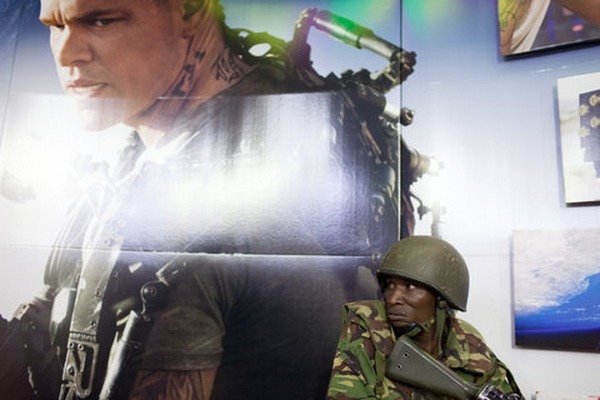
The largest point to make about the Nairobi attack is one that is so obvious, it’s almost impossible to appreciate. Clearly the media wouldn’t be on fire if this massacre had taken place in outdoor market stalls frequented by the poor and the middle class, or some ramshackle mall somewhere in the developing world. Instead however, it’s the upscale mall, that similar to the one you’d see in Beverly Hills or Scarsdale. And if it’s hard for us to appreciate how brilliant this was — just like the school shooting in Newtown trumps dozens on Chicago’s South Side, I’m sure al-Shabab understands and appreciates the connection.
Temples of Western commerce aside, the challenge for American visual media to find a baggage-free way to put its eyes on this dizzying real-time cataclysm only gets more complicated. Given the amount of violence in American movies, one school of thought would be to steer clear of anything that confuses the dramatization of war, soldiers and violence with the real thing. The photo above, on the other hand, appeared in-column in the breaking NYT Lens post beneath a very intense slideshow by Times photographer and Nairobi-resident, Tyler Hicks. If the caption had made some reference to the poster, if just to acknowledge its enormous weight in the image, that would be one thing, but here’s how it reads:
Gunshots continued to ring out after nightfall, though the Kenyan authorities did not provide much information about what was happening inside the mall.
It’s the fact we’re forced to silently account for this outsized celluloid (or video game) mashup somewhere and somehow in our brains, while also parsing it out from the real horror, is what’s actually more jarring.
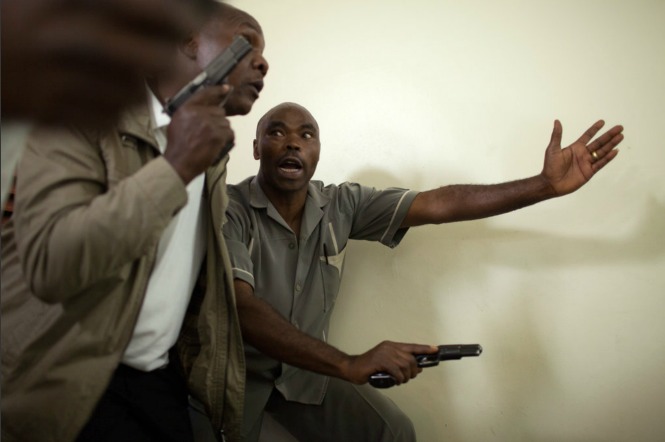
Still another variation of the drama theme involves the depiction of those civilian security personnel. The warning light here involves the risk of blurring the line between editorial photography with powerful associations to violent blockbusters and blaxplotation films.
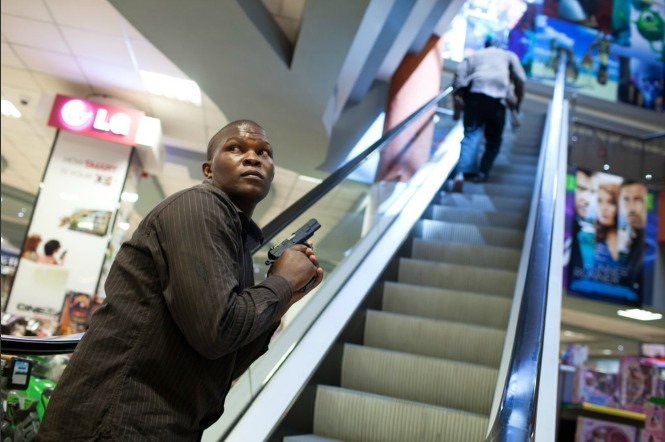
With the alternately hot and cool lighting, the dramatic profile, the escalator with the bad guys up there somewhere, and, again, the cinematic posters packing the frame, this photo — which also ran on the front page of yesterday’s NYT print edition — might do justice to Tarantino.
And there are at a least a few more themes to be watchful about.

Be it Kenya or Haiti, there is always the danger of fostering an image of ineptitude on the part of local authorities, especially in contrast to the capacities of the white Westerner.
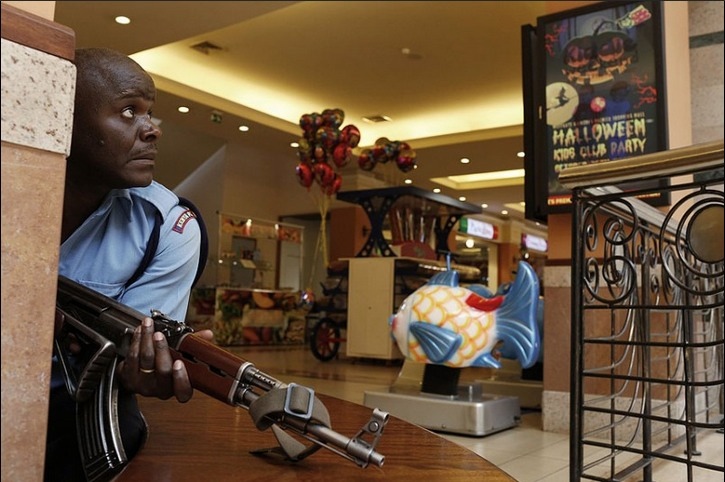
This gives us the tremulousness of the local forces and balloons on the set of Fright Night.

These image are insidious, I should emphasize, because they’re not ubiquitous but mostly, rather, embedded in a larger mix. As a result, they will subtly undermine photos like this one, a shot which is exemplary for the officer’s poise.

Another point. It’s important to make sure there’s no ambiguity between who’s a good guy and who’s a bad guy when it comes to black men with guns. The problem with this Reuters image appearing in this Telegraph slideshow has to do with the caption. It reads:
Kenya’s presidential office said that one of the attackers was arrested on Saturday and died after suffering from bullet wounds.
Picture: Goran Tomasevic /Reuters
You would hope that the readers saw enough of the pictures or read the stories enough to understand that the attackers remained completely invisible – to the press at least. Otherwise, it’s entirely possible to confuse which side this guy’s on.
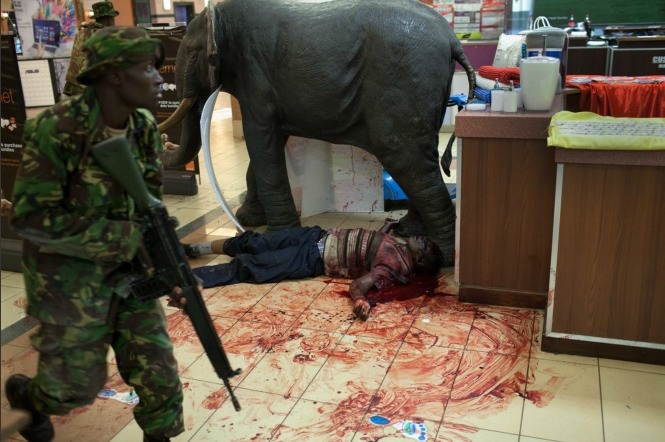
Back to the Hollywood theme, another way to understand the danger here has to do with infusing horrific news images with irony.
The mall might be generic but what can’t be underestimated — considering we’re still talking about “the dark continent” — is the domestic readership’s capacity for cultural incomprehension. I’m sure upscale Africans understand the artifact as an amusement and a throwback — similar to the statue in a mall in San Francisco of a miner panning for gold . Still, I think it’s symbolically tricky in this foreign land, to juxtapose this screaming savagery (and the cammo) with an elephant.
(photo 1-3, 8 : Tyler Hicks/New York Times. photo 4: Thomas Mukoya/Reuters caption: A journalist rescues a woman injured in the shootout. photo 4: Siegfried Modola/Reuters caption: A police officer tries to secure an area inside the Westgate Shopping Centre. The al-Qaida-linked Somali militant group Al Shabaab has claimed responsibility for the deadly attack. photo 5: Goran Tomasevic / Reuters via WAPO caption: A soldier carries a child to safety.)
– See more at: http://www.bagnewsnotes.com/2013/09/things-to-be-concerned-about-in-the-mall-attack-photos-from-nairobi-graphic/?utm_source=feedburner&utm_medium=feed&utm_campaign=Feed%3A+Bagnewsnotes+%28BAGnewsNotes%29#sthash.h3R5Y0Ha.dpuf
__________________________

SEPTEMBER 23, 2013
Will the New Face of Terrorism
Now be Somalis?

Between the horrific drama playing out in Kenya with the mall shooting, this new Tom Hanks movieCaptain Phillips which is showing commercials every 5 minutes and is about US/European ships being victims of pirates and the US media highlighting the exploits of Al-Shabaab, the new terrorist boogie man is gonna be Somalia in a big way.
http://www.youtube.com/watch?v=-WT8NYn9Wf8
The fact that there are reports surfacing saying that Somalian-Americans are rolling with or have sympathies with Al Shabaab, means this war on terror will increase and domestic spying will be justified especially if it’s a Black face being spied upon..We have already seen increased surveillance activities in large Somali communities in places like Minneapolis.
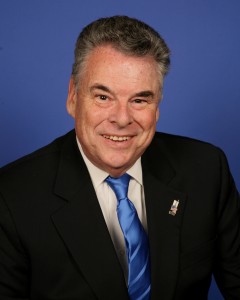
It was just the other day we heard Congressman Peter Kingchairman of the House of Representatives committee on counterterrorism and intelligence has already come out and urged the FBI to watching Somali-American communities. He asserts that Al Shabaab has been recruiting amongst Somalian Americans and thus all Americans should be wary of them.. Of course King is not too vocal about us needing to be wary of white Americans who may be recruited by Neo-Nazis, KKK members or other white supremacist organizations which routinely are involved in acts domestic terrorism.
Words like lawlessness and ungovernable are routinely used to describe Somalia and her people. What’s often missing in the analysis are the stories about extreme drought and poverty which were exacerbated by polluted waters caused by world commercial vessels passing through the Horn of Africa, which has depleted fish supplies which has long been a main sources of food and commerce.
Pay attention as all this unfolds… It’s in the mist of chaos that serious, oppressive moves are made..
http://www.youtube.com/watch?v=D87knFnlSAE
>via: http://hiphopandpolitics.com/2013/09/23/will-new-face-terrorism-now-somalis/
__________________________
Somalis in Kenya fearrevenge attacks |
Three days after the Nairobi mall siege began, Somalis in the capital say they fear retaliation.
|
Eastleigh, a Somali suburb of Nairobi, has been the scene of much ethnic tension in recent years, with many Kenyan youths accusing refugee residents of having ties with al-Shebab [AFP]
|

Nairobi, Kenya – Omar Abdirahman admits his moods have been swinging from bad to worse. The 28-year-old lives in fear for his life, but also says his more affluent friends have it worse than he.
“Since I heard about this tragic incident, I have felt really bad,” he said. “You cannot be in any good moods when such tragic incidences involving such loss of lives, property and lapse of security happen.”
Abdirahman, is a university student and a frequent patron at upmarket malls including Westgate Shopping Centre, the retail paradise in Nairobi’s well-to-do Westlands neighbourhood. He was chatting with friends on Saturday in the predominantly Somali neighbourhood of Eastleigh, here in the Kenyan capital, when news emerged of what was thought to be a regular daylight robbery.
|
|
| Kenya forces mount assault to end mall siege |

Since it became clear that the al-Qaeda-linked Somali group, al-Shebab, was behind the attack, things have been very different for him and most of his friends.
“The Somali people I have spoken to fear going into town or any crowded places because there may be a terrorist strike,” he said. “Most of my Somali friends, the professionals working for organisations, and businesspeople, fear they may be trapped in any xenophobic attacks.”
The blame game begins
Three days into what has turned out to be Kenya’s worst terrorist attack since the bombing of the US embassy in 1998, Abdirahman believes life is set to take a permanent shift for most Somalis residing in Kenya.
Security analysts do not yet agree on what should constitute a consistent direction of assault by Kenya to identify and effectively deal with recurring threats – but many believe profiling almost every citizen would be one key step to prevent future attacks.
“Somalis have been blamed for any attacks involving grenades and gunfire that have ever taken place even if it was otherwise,” said Abdirahman. “That the al-Shabab Islamists have claimed responsibility for this attack has changed a lot of things.”
Mohamed Shahid, a 32-year-old Kenyan-Somali, lives in Westlands, the middle-class neighbourhood rarely touched by the frequent security operations that plague Eastleigh, on the other side of the capital.
“Some of my friends and most Somalis fear they could be executed [in retaliation],” he said. “So many have not gone to work today, because they fear entering matatus [minibuses].”
Recruiting grounds
There has also been a sense of panic in Majengo district, a few kilometres from infamous Eastleigh.
“There is fear here in Majengo, since this is place will also be the target of police,” said Ali Edachi, a resident of the impoverished urban neighbourhood.
The UN monitoring group for Somalia and Eritrea in its yearly report mentioned Majengo as the most notorious recruitment ground for al-Shabab fighters, with an estimated 500 Kenyan youth drafted into the ranks to fight alongside the group in Somalia.
Although there is no curfew in place, the people in this neighbourhood know the drill. Everyone here avoids streets after dark. Edachi says they have a good reason for their caution.
“We know this is one of the places to be targeted after Somali neighbourhoods, because of our youths’ involvement with the terror group al-Shabab activities in and out the country.” Edachi said.
‘Philosophy of cowards’
President Uhuru Kenyatta, whose nephew died in the Westgate attack, made some bold statements. “We have fought for the freedom to live a life we chose,” he told Kenyans. “We have fought courageously to defeat terrorism. Terrorism is the philosophy of the cowards.”
The attack against Westgate was an attack against western lifestyles, said the president.
|
|
| Kenyan army says most hostages rescued |

Shahid’s first thought the Westgate attack was merely a violent robbery. His thoughts turned to his loved ones – thinking any of them could have been caught up in the shooting.
“It later turned out to be a terror attack,” he said. “I said to myself: ‘Not again. They [al-Shabab] did it again.’ I was worried about the people in the mall. It is a big place, and any of my family members, relatives and friends could be there shopping.”
The rescue operation involved as many as 1,000 people being evacuated from the shopping centre. At least 62 people were shot dead by the armed gang – who reportedly first attacked the mall using grenades and automatic rifles.
Condemnation and fear
Religious leaders have condemned the attacks. But there is a feeling that Muslims maybe targeted in reaction to reports that the gunmen specifically targeted non-Muslims, letting some adherants of Islam walk free.
“We know and its obvious Muslims are living in fear after the shopping mall attack,” said Adan Wachu, the secretary-general of the Supreme Council of Kenyan Muslims.
“We want the criminals who have killed and targeted innocent people to be brought to justice. They must face the full force of the law. We do not want security officers to target our people discriminatively – but we support any security officers who want to carry out their operation and interrogate suspects…
“We do not want them to target youths in the streets, malls and public transport vehicles. They should be very careful with how they handle this situation.”
Arrests
The Anti-Terrorism Police Unit (ATPU) were already tracking down several people they suspect to have been involved in the Westgate siege.
|
|
| Inside Story – Al-Shebab: A war of vengeance? |

Mombasa resident Thabit Mukhtar Thabit said his 19-year-old nephew was arrested on his way home to the port city on Sunday, after attending a family wedding with his mother.
According to Thabit, ATPU agents stopped the young man’s bus along Nairobi-Mombasa highway at Machakos Junction, 50km outside of the Kenyan capital.
“The officers identified themselves and said they were from ATPU,” he said. “They said they were going with her son. The mother went back to Nairobi. She is still searching for her son, she has gone to all police posts in the city, but the son is nowhere to be seen.
“As a parent, I am very concerned. I don’t know why these police officers are torturing my sister by taking away her son. That is very sad and that is not how to do things and get the culprits. There is no need to harass innocent Muslims as [police] carry out their duties.”
Dialogue
Wachu, of the Supreme Council of Kenyan Muslims, said his organisation would work with leaders from other religions.
“We will give security forces any help they may need from our side,” he said. “But we hope any investigation will be done in a accordance to the law.”
Most Somalis living in Nairobi, having fled their homes in Somalia after decades of instability, violence and a collapsed state, fear both the police and public lynch mobs. Many fear the police will start targeting them with arbitrary arrests. They also fear civilian Kenyans may target them.
“I am concerned and I am controlling my movement,” said Abdirahman. “The attack can come from the same group – or someone else – you are not sure.
“I fear going out,” he told Al Jazeera. “The social media sentiment has changed against the Somalis. They are saying the Somalis must go home. There are places you fear to visit because they may attack you, saying: ‘Your people have done this.'”
Follow Mohammed Yusuf on Twitter: @Moyusef
>via: http://www.aljazeera.com/indepth/features/2013/09/2013923172222160177.html