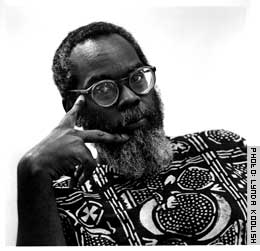

JESSICA NEWRY

Kalamu ya Salaam's information blog
JESSICA NEWRY

Mississippi State University
Celebrates 50th Anniversary of Freedom Summer
October 20-21, 2014
This year marks the 50th-anniversary of the Freedom Summer Project, which began in Mississippi on June 15, 1964. The Mississippi Project established fifty “Freedom Schools” and registered over twelve hundred African Americans to vote. African American Studies and Mississippi State University invite scholars and students to come to the conference to give papers, present posters or any creative expression on any aspect of the freedom project.
Participants are urged to submit their 250-word abstracts by July 15, but no later than August 1. Proposals may be sent via email to with “Freedom Summer Conference” in the subject line. Please include an abridged Curriculum Vita or resume including your institutional affiliation and contact information. Students should indicate whether they are graduates or undergraduates.
The two-day conference will be held on the campus of Mississippi State University, located in Starkville. Participants traveling by air will book through Delta airlines, which flies into the GTR Airport in Columbus. Mississippi State University and African American Studies will provide FREE shuttle service to the Conference hotel.
Please direct questions concerning the Conference to Linda Miller or call 662-325-0587.

$5
A prize of $1,000 and publication in Comstock Review is given annually for a poem. Kwame Dawes will judge. Submit any number of poems of up to 40 lines each with a $5 entry fee per poem by July 1. Send an SASE, e-mail, or visit the website for complete guidelines.
Comstock Review, Muriel Craft Bailey Award, 4956 St. John Drive, Syracuse, NY 13215. Betsy Anderson and Michael A. Sickler, Managing Editors.
>via: http://www.pw.org/writing_contests/muriel_craft_bailey_award
The Northeast Popular/American Culture Association (NEPCA) is seeking paper proposals in the area of Ethnic and Race Studies for its annual conference on Friday and Saturday, October 24-25, 2014, at Providence College, Providence, RI.
NEPCA conferences seek to be those where graduate students, junior faculty, independent researchers, and senior faculty convene as equals. NEPCA prides itself on offering intimate and nurturing sessions in which new ideas and works-in-progress can be aired, as well as completed projects. Papers are generally 15-20 minutes in length. NEPCA encourages creative delivery of papers, though they can also be read.
Both individual papers and complete panels will be considered. The deadline is June 9, 2014. Please send a 1-2 page proposal and a one-page vita to the Program Chair, Robert Hackey (rhackey@providence.edu), and to Sally Hirsh-Dickinson (shirshdickinson@rivier.edu), Area Chair for Ethnic and Race Studies.

May 31, 2014

In a nation that has long operated on the principle that an “American Dream” is available to anyone willing to try hard enough, the term “working poor” may seem to have a bright side. Sure, these individuals struggle financially, but they have jobs — the first and most essential step toward lifting oneself out of poverty, right?
If only it were that simple.
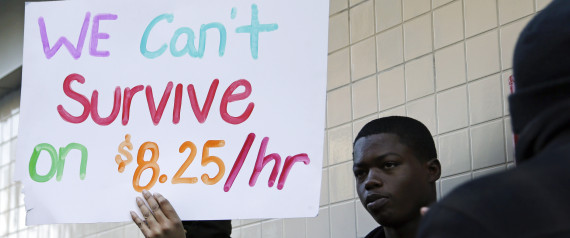
According to 2012 Census data, more than 7 percent of American workers fell below the federal poverty line, making less than $11,170 for a single person and $15,130 for a couple. By some estimates, one in four private-sector jobs in the U.S. pays under $10 an hour. Last month, Senate Republicans blocked a bill that would have raised the federal minimum wage from $7.25 to $10.10 an hour, despite overwhelming public support for the measure.
And these numbers don’t say anything about the many Americans who earn well above the official poverty line and still barely stay afloat. In HuffPost’s “All Work, No Pay” series, the working poor told their own stories, painting a devastating portrait of their day-to-day struggles.
They’re a diverse range of people: single parents, couples with and without children, young women with graduate degrees, business owners, seniors and everyone in between. Their financial situations, however, show many similarities. Jobs generally provide them with the means to barely scrape by, treading paycheck-to-paycheck, earning just enough to keep from going under, swallowing their pride sometimes to take food stamps or visit food banks. Others are entirely out of work, tirelessly seeking employment and relying on other means to survive.
Through their words, we see what it’s really like to be “working poor” in America — and just how much more it looks like rock bottom than most would imagine.
Being working poor means toiling through “pure hell” for next to nothing.
Earlier this year, 55-year-old Glenn Johnson was making about $14,000 a year — or $7.93 an hour — at a Miami-area Burger King. He’d been in and out of the fast food industry for more than 30 years. Recently he watched as his employer reported a 37 percent increase in its quarterly profit, while continuing to resist a minimum wage increase that workers like Johnson have been fighting for.
Johnson described his daily routine as “pure hell.” It’s a nonstop effort to keep the store clean and the customers and his managers — most of whom are less than half his age — happy. “Sometimes, I get home and I’m so tired, I eat dinner, take a shower, lay down to watch TV, and I’m going to sleep,” he said. “Next morning comes. I’m tired, but I’m trying to make it.”

And yet still wishing you could work more.
While Johnson was far from enthusiastic about his work at Burger King, with no computer and few immediate prospects of another job, he still wished he could clock more hours. He said he worked about 35 hours a week, but wanted anywhere from 40 to 50, which would make it easier to pay for his $765-a-month rent, gas and any of the things he can’t currently afford. Since Johnson first told his story, his corporate-owned Burger King made him full-time and gave him a raise.
Deangelo Belk, a 21-year-old Wendy’s employee making $7.50 an hour, also knows the pain of not getting enough hours to pay for the things he wants or to help him save enough to move out of his mother’s house. He works around 10 hours a week and said that he’s regularly ignored when he asks for more time.
Because you know you’re lucky to have a job, no matter how awful it is.
Vanessa Powell, 29, works full time in a Goodwill warehouse in Seattle for $9.25 an hour. She holds a bachelor’s degree in English and a master’s in business administration. But with her fiancé out of work, she’s just grateful to have a job, even though she occasionally feels it’s “beneath” her. Even with the job, however, it’s sometimes hard for them to get enough to eat.
“I mean, yeah, it’s dirty work and often demeaning work, but at least it’s work,” she said. “Even though [my fiancé] only worked part time, it was still something. I make enough to cover rent and electric, but we share a cell phone, which is why it’s kind of hard for both of us to search for jobs.”
But finding employment can also risk the crucial aid that helps you get by.
Helen Bechtol, 23, is a mother of two and a community college student with dreams of graduating from the University of North Carolina Wilmington. To help pay for child care, she took a second job, which made her ineligible for day care assistance.
Ashley Schmidtbauer said her family is “not destitute, but we barely make it month to month.” She stays at home to raise her kids and has found there aren’t any easy alternatives. Her husband’s income alone makes the family ineligible for day care assistance. “To be honest, we make roughly $35,000 a year. Somehow, we make over $10,000 more than their limits allow,” she said. “We are the in-betweeners. Not making enough to live ‘comfortably’ — but not ‘poor’ enough to get any assistance either. We don’t expect handouts. We just want what is best for our family.”
Being working poor means knowing it can be expensive just to keep your job.
Joanne Van Vranken, 50, was laid off in 2011. After nearly two years of unemployment, she landed a temporary administrative assistant position, which requires a 60-mile round-trip commute every day. Van Vranken’s car is in desperate need of repair, but she hasn’t had the money to fix it in years. She’s worried her car will die, which could put her back in dire financial straits. “And I don’t have the money to buy a new one,” she said. “But I have to do it, because we need to pay the bills.”
Janet Weatherly, 43, has almost completed her doctoral degree but can’t find employment in her field. Instead, she’s making $11 an hour as a sales associate for a major retailer. Her job is a 45-minute drive from her house, and a significant chunk of her paycheck goes toward gas money. Weatherly’s parents put her car repairs on their credit cards. She’d like to finish her dissertation, but currently can’t afford to get her documents out of a storage unit halfway across the country, much less invest more time in her education.

Or lowering your standards for employment and often still not finding work.
Craig Gieseke is unemployed. At nearly 60, he spent 32 years in journalism, but most of the past decade he was self-employed, so he doesn’t qualify for unemployment benefits. Gieseke doesn’t want assistance. He wants a job, and he’d take pretty much any at this point. Would-be employers tell him that he is “overqualified” — a term he calls a euphemism for “too old” — or that he’d be “bored” doing the required work.“‘Bored’ is hanging around the house all day because you don’t have money to do anything else,” he said.
It means making shortsighted decisions because long-term plans seem doomed.
Linda Tirado knows what it’s like to be desperately poor. She understands firsthand the mentality that leads many people in similar situations to spend money on things like cigarettes and fast food.
“It is not worth it to me to live a bleak life devoid of small pleasures so that one day I can make a single large purchase. I will never have large pleasures to hold on to,” Tirado said. “There’s a certain pull to live what bits of life you can while there’s money in your pocket, because no matter how responsible you are, you will be broke in three days anyway. When you never have enough money, it ceases to have meaning.”
And living in constant fear of losing what little you do have in an instant.
When Alicia Payton, a 31-year-old mother of two, received a promotion at her job, she thought the increased pay would make the nearly 100-mile round-trip commute worth it. But hope quickly turned to panic when she had a car accident, doing $4,000 worth of damage to her vehicle. Unable to afford immediate repairs or a rental, Payton couldn’t get to work, which she thought would result in her firing. “I’ve worked so hard to get where I’m at, and one simple thing and I’m afraid I’m going to lose everything,” she said. Payton later learned that she had not been fired and had more time to find another way to get to work.
Karen Wall, 38, works as a teacher, cheerleading coach and weekend bartender. Yet money is tight, and all of it goes to keeping her family afloat and paying off her student loan debt. Both of her boys have special needs, so even with the multiple income sources, Wall knows she’s only one disaster away from losing it all. “If I got in a car accident, I’d be homeless,” she said. “If I get laid off from any of my jobs, my kids will end up going hungry.”

Even if things seem manageable now, you could be just a few setbacks away from collapse.
Not so long ago, Kathleen Ann had a house, vacation time, spending money and everything else available to someone with a high-paying corporate job. Then she was discarded in a layoff, cast into a world where she could only find occasional part-time work. Ann now makes less than $20,000 a year, lives in an apartment and has been forced to accept that she is poor — a “Used-to-Have,” as she described it. “As a ‘Used-to-Have,’ I know exactly what Corporate America, lobbyists and politicians have taken away from me,” she said.
Being working poor means learning the hard way that investing in your future can actually make things tougher.
Weatherly, who has a bachelor’s degree in English and a master’s degree in public health, is still paying off her six-digit student loan debt. “Things are so bad that I can’t even afford to file for bankruptcy,” she said. “I have applied for hundreds of jobs over the past six years.”
DJ Cook, 36, a teacher who has a master’s degree and lives in a converted garage, described himself as “suffocated by student debt.” “I’ve done everything that I was told to do in order to be successful,” he said. “I’m in a lifetime of debt with no foreseeable answers.”
Carla Shutak thought buying a house with her husband, who was gainfully employed as a civil engineer, would be a wise investment. When he was laid off in 2009, they couldn’t keep up with the mortgage payments and their home was foreclosed on. “My American Dream died,” she said. “Despite doing what we were taught was right by putting 20 percent down and asking for a fixed 30-year mortgage, we were now in our 40s and starting over with nothing.”
And can put you at a disadvantage even as you’re just starting your adult life.
Monica Simon, 24, works full time at an online advertising firm, earning $23,000 a year after taxes. She’s still paying off her student loans and often relies on credit cards to cover basic costs. “Sometimes I get paid and then I have, maybe, $150 left over for the two weeks,” she said. “I just feel I’m getting way behind where I want to be for my age. I feel I’m just starting my life and I’m already miles and miles behind.”

Even if you saved for retirement, being working poor means using up those funds long before you get there.
Van Vranken spent 16 months unemployed before landing her current temp job. During that time, she used her retirement savings to cover expenses. “I’ve decimated my 401(k),” she said. “Without a permanent job, I don’t know if I’ll be able to rebuild it. I worry I’m going to be one of those senior citizens whose only meal each day is from Meals on Wheels.”
It means facing the harsh reality that while money can’t buy happiness, it’s hard to be happy without any.
Bechtol is consumed with constant anxiety over having enough money to support her two young children. “I go to school and am only paying my parents $250 a month to live in their house and can still barely do it,” she said. “I get so overwhelmed sometimes that I think it affects my parenting, and that’s what I hate the most. I don’t need money to be happy, but I do need money to pay for the resources I need for happiness.”
And realizing that without money, it’s difficult to meet fundamental human needs.
Jason Derr, 37, who earns $10.75 an hour and supports his wife and baby, wishes he and his wife could socialize with the few friends they have. But the lack of money stops them. “We can’t afford to do anything,” he said. “I feel like we are unable to participate in humanity, that being alive has a buy-in cost.”
Similarly, Simon will spend full weekends at home without social interaction. “There will be weekends when I’ll just have to sit home because if there’s a priority between food and going out, it’s going to be food.” Powell added that she hasn’t seen her friends in “six months because I can’t afford to go out with them, and they all want to go out.”
For the working poor, basic medical care is a luxury that’s often sacrificed.
Carol Sarao, 57, a formerly successful musician who now brings in roughly $240 a week writing web content, saves money by avoiding routine medical care and hoping her health remains relatively stable. When she does get sick, she tries to fix the problem herself. “I try to research it on the Internet or I try to find a friend who has antibiotics or something,” she said. “I haven’t had any sort of exam in years. I don’t know how much longer it can go on.”
Sarao described a time she suffered an allergic reaction and desperately needed a hospital visit, but ultimately decided the financial burden wasn’t worth it. “I remember sitting outside of the emergency room and thinking, ‘If I can’t breathe, I’ll go in and get the shot. But if I can breathe, I won’t go in and I’ll save the money,'” she recalled. “I’ve had different cuts that got infected and I just used a hot compress.”
Or a necessity that leads to taking risky chances.
Bernadette Feazell, 65, who makes $8 an hour at a pawn shop in Texas, takes a four-hour bus trip to a dangerous area of Mexico when she has medical needs. She contends the trips save her thousands of dollars. “I need a cavity filled,” she said. “My last Mexican filling fell out, from two years ago. I went down to Nuevo Laredo. It’s very violent.”
Feazell also buys antidepressants across the border. “I buy my Prozac over the line. I speak Spanish,” she said. “Without antidepressants, I don’t think — it would take a toll on me.”
Because not having the money to seek medical treatment doesn’t mean you don’t need medical treatment.
Beverly Hill, 60, was laid off from her full-time job more than six years ago and has been actively seeking employment ever since. She avoids routine check-ups because she can’t afford them. But the last time she visited the doctor, for what she described as excruciating abdominal pain, he found something more worrisome.
“He wasn’t so concerned about my guts as he was about an irregular heartbeat,” she said. “I was hospitalized. Two and a half days in the hospital came to over $40,000.After pleading poverty and asking to be considered a charity case, the hospital relented and lowered my bill to $12,000. I still can’t afford to pay this. I’m eking it out a little at a time.”
Being working poor means coming up with creative solutions in order to eat.
Larry Silveira, 60, who earns $9.25 an hour at his part-time retail job, was raised on a farm and learned how to can vegetables at a young age. He now uses the samestrategies to maximize his family’s limited food supply. “You buy certain vegetables when they’re in season, when they’re cheap. You put them in the freezer and have them in the winter when they’re expensive,” he said. “If you find chicken breast for 99 cents a pound, buy $3 worth and put it in the freezer.”
Derr and his wife keep a “food safety box” in the pantry. “Every time we go grocery shopping, we buy a $1 item — pasta, canned veggies, etc.,” he explained. “At the end of October, we had to live off that box for two weeks.”

And sometimes accepting you’ll just have to go hungry.
Cory Brooks, a senior at George Washington University, works more than full time in addition to her studies and barely makes enough money to eat. “My friends always ask how I stay in such good shape, how I never gained the ‘Freshman 15,'” she said. “I smile and shrug, but what I really want to tell them is that being too poor to buy food is great for keeping the weight off.”
It means sacrificing your own basic needs for those of your children.
Trisha Lovetrove, a wife and mother of two, said that despite her husband’s full-time job, some weeks she can’t afford to buy enough food for the whole family — so she’s the one who suffers. “I feed my children and my spouse, and find an excuse not to be hungry because there’s nothing left,” she said. “Those weeks suck your will to live.”
Kelly Lingo, 22, a stay-at-home mom raising her infant son with her boyfriend, who works full time for $10 an hour, described a similar struggle. “If we do have extra money, it usually goes to diapers or formula,” she said. “Feeding my son, that’s my biggest concern. As much as I don’t like to skip meals, I can do it — I can go without eating if it means feeding my son.”
Or coming to terms with the fact that you may never be able to afford parenthood at all.
At 36, Cook would like to have children someday. But his financial situation makes that seem impossible. “[I]t’s slowly starting to dawn on me that I will most likely never have children, as I would never intentionally bring another child into the world of poverty,” he said. “A house and/or a family is a laughable proposition at this point.”
For the 29-year-old Powell and her fiancé, poverty has also affected discussions about having kids. “My fiancé and I have kicked around the idea of having kids for almost as long as we’ve been together, but we don’t make enough, in all sanity, to allow a child in our care,” she said. “About eight months ago, we just stopped talking about it entirely.”
And if you have children, being working poor means worrying that their lives will ultimately be harder than yours.
Jennifer Blankenship, a 39-year-old mother of four whose family lives on her husband’s $11-an-hour job, has been able to send one daughter to college with the help of financial aid. Still, she, along with a growing number of both middle-class andpoorer Americans, takes a bleak view of her children’s future.
This story has been updated with information about Johnson’s current full-time employment status.

20 May 2014

The United States military is set to return to the Philippines 22 years after being evicted. The imminent arrival of US forces has renewed focus on the thousands of “Amerasians” fathered by US military personnel. Aya Lowe went in search of this forgotten generation.
Mary-Jane Stephens lives in a gritty one-room house with her three children and three grandchildren. Two sprawling mattresses pushed together make up the sleeping area, while one stove, sofa and TV make up the rest of the household.
She “worked the bars” in the red-light district that grew up around the major US military bases north of Manila established following World War Two.
She now dedicates her time to taking care of the grandchildren. Her children don’t earn much, but they keep the family in food and water.
In the more than two decades that the bases were operating, hundreds of thousands of US servicemen were stationed at the naval and air force facilities or passed through on their way to conflicts in the region such as the Vietnam and Korean Wars.

People deny you work simply because of the colour of your skin”—Ashley Descalier, Amerasian
Many struck up relationships with local women, many of whom, like Mary-Jane, struck up relationships with Americans.
“When you meet them, they make you believe it’s love and that it’s going to last forever, but then they just leave,” the 41-year-old says.
Each of her children has a different father. Each one was a US serviceman.
Conservative attitudes
There are now an estimated quarter of a million Amerasians in the Philippines who can trace their heritage back to US servicemen, a relationship that now stretches back several generations.
Most are clustered around Angeles and Olongapo, towns north of the capital close to the Subic naval base and Clark airbase.

Red light area near US military base, Angeles City
Mary-Jane Stephens herself was born to a Filipina and a US serviceman. And just like her own children, she doesn’t know who her father was.
“My father was a black American. My mother worked behind a bar and that’s where she met my father,” she says.
“They were living together for a bit, but they didn’t get married because my grandmother didn’t approve of the relationship. So he left.
“When I was about 10 or 11 years old I tried looking for him, but I forgot his middle name so couldn’t find him.”
In the Philippines’ predominantly conservative Catholic society, Amerasian children were often discriminated against for being illegitimate, mixed-race, or the children of prostitutes.
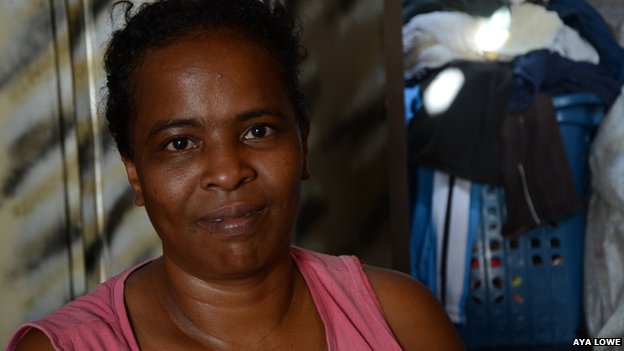
Mary-Jane Stephens tried looking for her father when she was young
Many were also abandoned by their mothers, who were unable to bring them up or too ashamed to keep them.
‘Abject poverty’
As a result, many grew up in poverty, raised by other family members or adopted by foster parents.
A recent study of the community by the Philippine Amerasian Research Institute painted a grim picture.
The majority, the 2010 report said, lived in “abject poverty”, were likely to be out of work, homeless, have alcohol, drug or familial abuse problems, as well as “identity confusion, unresolved grief issues over the loss of their fathers, social isolation and low self-esteem”.
Those children fathered by African-Americans suffered the most prejudice. According to one estimate, a quarter of Amerasians in the Philippines are of African-American descent.
Many say they have been denied jobs purely because of their skin colour.

Ashley Descalier is one of the estimated quarter of a million Amerasians fathered by US servicemen
“It wasn’t easy growing up being a different colour from everyone else,” says Ashley Descalier, 23, who is of African-American and Philippine heritage.
“People deny you work simply because of the colour of your skin.”
It was the same for Mary-Jane. “When you’re dark they call you names like negro or baluta,” she says. “When you grow up you get used to it.”
Many Amerasians still dream of finding their fathers. However, in most cases, the search has proved nearly impossible. Even if they did, it is another task to persuade their long-lost father to acknowledge paternity.
Christine Jackson, 20, was one of the lucky few who re-connected with her father.
Her mother, Ana, met a US marine from Michigan when she was 20. By the time he ended his tour and left for the US, Ana was pregnant.
At the age of 17, Christine set about searching for him online, eventually finding his profile on Facebook, and sent him a message.
“I didn’t want to check my account for days because I was scared that he wouldn’t write back,” she recalls.
“Eventually my friends told me he was trying to get through to me by writing on my wall. I was so happy when I found out he wanted to know me. We’ve been in touch since then.”
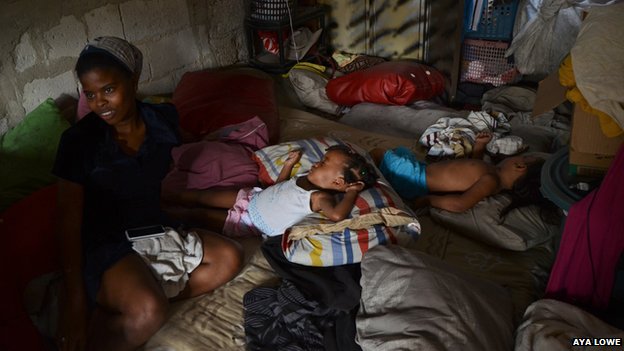
Mary-Jane’s daughter Neirin and her granddaughter stand little chance of either finding their father or of claiming US citizenship
However, even if a father accepts paternity, US legislation does not make it easy to acquire American citizenship.
In 1982, US Congress passed a law giving preferential immigration status to Amerasian children born in Thailand, Vietnam, Cambodia and Laos but not the Philippines.
The only way Philippine Amerasians can become citizens is if their fathers file paternity claims before they turn 18.
Since the military bases closed over 20 years ago, most of the children are already too old to claim citizenship.
History repeating itself
The impending return of the US military has not been universally welcome.
After all, the Philippine government took advantage of the damage wrought by a 1991 volcanic explosion, which wrecked Clark airbase and buried Subic Bay under 1ft (30cm) of dust, not to renew the leases on the facilities.

US sailors on the aircraft carrier USS Independence bid goodbye as the US prepares to vacate its military bases in 1992
Echoes of that anti-colonial feeling were seen in violent demonstrations that erupted outside the US embassy in Manila to protest against the agreement, part of Washington’s “pivot” to Asia.
The Philippine government has a long-running territorial dispute with Beijing in the South China Sea and covets US protection, while Washington is keen to project military force throughout the region.
These new bases will not be permanent nor will large number of US troops be stationed in the Philippines.
However, Amerasians fear the consequences of this new agreement creating a repetition of history.
“It was 22 years ago when the US bases were pulled out,” stated the United Philippine Amerasians campaign group.
“Most of us didn’t get to meet our fathers. And now that the bases are coming back, thousands of Filipino-Amerasians are expected to be born.”
About the author: Based in Manila, Aya Lowe writes business, travel and human interest stories around Southeast Asia and the Middle East.
>via: http://www.bbc.com/news/world-asia-27379710

Friday 30 May 2014
Edward Snowden is the greatest patriot whistleblower of our time, and he knows what I learned more than four decades ago: until the Espionage Act gets reformed, he can never come home safe and receive justice

As the author knows from direct chat-log conversations with him over the past year, Snowden acted in full knowledge of the constitutionally questionable efforts of the Obama administration, in particular, to use the Espionage Act in a way it was never intended by Congress. (Video still via NBC News)
John Kerry was in my mind Wednesday morning, and not because he had called me a patriot on NBC News. I was reading the lead story in the New York Times – “US Troops to Leave Afghanistan by End of 2016” – with a photo of American soldiers looking for caves. I recalled not the Secretary of State but a 27-year-old Kerry, asking, as he testified to the Senate about the US troops who were still in Vietnam and were to remain for another two years: How do you ask a man to be the last man to die for a mistake?
I wondered how a 70-year-old Kerry would relate to that question as he looked at that picture and that headline. And then there he was on MSNBC an hour later, thinking about me, too, during a round of interviews about Afghanistan that inevitably turned to Edward Snowden ahead of my fellow whistleblower’s own primetime interview that night:
There are many a patriot – you can go back to the Pentagon Papers with Dan Ellsberg and others who stood and went to the court system of America and made their case. Edward Snowden is a coward, he is a traitor, and he has betrayed his country. And if he wants to come home tomorrow to face the music, he can do so.
On the Today show and CBS, Kerry complimented me again – and said Snowden “should man up and come back to the United States” to face charges. But John Kerry is wrong, because that’s not the measure of patriotism when it comes to whistleblowing, for me or Snowden, who is facing the same criminal charges I did for exposing the Pentagon Papers.
As Snowden told Brian Williams on NBC later that night and Snowden’s lawyer told me the next morning, he would have no chance whatsoever to come home and make his case – in public or in court.
Snowden would come back home to a jail cell – and not just an ordinary cell-block but isolation in solitary confinement, not just for months like Chelsea Manning but for the rest of his sentence, and probably the rest of his life. His legal adviser, Ben Wizner, told me that he estimates Snowden’s chance of being allowed out on bail as zero. (I was out on bond, speaking against the Vietnam war, the whole 23 months I was under indictment).
More importantly, the current state of whistleblowing prosecutions under the Espionage Act makes a truly fair trial wholly unavailable to an American who has exposed classified wrongdoing. Legal scholars havestrongly argued that the US supreme court – which has never yet addressed the constitutionality of applying the Espionage Act to leaks to the American public – should find the use of it overbroad and unconstitutional in the absence of a public interest defense. The Espionage Act, as applied to whistleblowers, violates the First Amendment, is what they’re saying.
As I know from my own case, even Snowden’s own testimony on the stand would be gagged by government objections and the (arguably unconstitutional) nature of his charges. That was my own experience in court, as the first American to be prosecuted under the Espionage Act – or any other statute – for giving information to the American people.
I had looked forward to offering a fuller account in my trial than I had given previously to any journalist – any Glenn Greenwald or Brian Williams of my time – as to the considerations that led me to copy and distribute thousands of pages of top-secret documents. I had saved many details until I could present them on the stand, under oath, just as a young John Kerry had delivered his strongest lines in sworn testimony.
But when I finally heard my lawyer ask the prearranged question in direct examination – Why did you copy the Pentagon Papers? – I was silenced before I could begin to answer. The government prosecutor objected –irrelevant – and the judge sustained. My lawyer, exasperated, said he “had never heard of a case where a defendant was not permitted to tell the jury why he did what he did.” The judge responded: well, you’re hearing one now.
And so it has been with every subsequent whistleblower under indictment, and so it would be if Edward Snowden was on trial in an American courtroom now.
Indeed, in recent years, the silencing effect of the Espionage Act has only become worse. The other NSA whistleblower prosecuted, Thomas Drake, was barred from uttering the words “whistleblowing” and “overclassification” in his trial. (Thankfully, the Justice Department’s case fell apart one day before it was to begin). In the recent case of the State Department contractor Stephen Kim, the presiding judge ruled the prosecution “need not show that the information he allegedly leaked could damage US national security or benefit a foreign power, even potentially.”
We saw this entire scenario play out last summer in the trial of Chelsea Manning. The military judge in that case did not let Manning or her lawyer argue her intent, the lack of damage to the US, overclassification of the cables or the benefits of the leaks … until she was already found guilty.
Without reform to the Espionage Act that lets a court hear a public interest defense – or a challenge to the appropriateness of government secrecy in each particular case – Snowden and future Snowdens can and will only be able to “make their case” from outside the United States.
As I know from direct chat-log conversations with him over the past year, Snowden acted in full knowledge of the constitutionally questionable efforts of the Obama administration, in particular, to use the Espionage Act in a way it was never intended by Congress: as the equivalent of a British-type Official Secrets Act criminalizing any and all unauthorized release of classified information. (Congress has repeatedly rejected proposals for such an act as violating the First Amendment protections of free speech and a free press; the one exception to that was vetoed by President Clinton in November 2000, on constitutional grounds.)
John Kerry’s challenge to Snowden to return and face trial is either disingenuous or simply ignorant that current prosecutions under the Espionage Act allow no distinction whatever between a patriotic whistleblower and a spy. Either way, nothing excuses Kerry’s slanderous and despicable characterizations of a young man who, in my opinion, has done more than anyone in or out of government in this century to demonstrate his patriotism, moral courage and loyalty to the oath of office the three of us swore: to support and defend the Constitution of the United States.

///////////////////////////////////////////////////////////////////////////////////////////////////////////////////////////////////////

Tuesday, 27 May 2014
Local Borno village women’s
group repels Boko Haram attack
on their communities
LOCAL women in the villages of Attagara and Kawuri in Borno State disarmed 10 Boko Haram terrorists who tried to attack their communities over the weekend resulting in the lynching of seven of the insurgents.
As part of its ongoing reign of terror, Boko Haram tried to spread its operations to Attagara and Kawuri villages in Gwoza and Bama Local Government Areas of Borno State. However, they were resisted by a group of women using local charms among other things and were disarmed.
After the women repelled the attacks, they then raised the alarm and the rest of the community rallied round to apprehend the insurgents. Three of the terrorists fled but seven were arrested and lynched by an irate mob.
One resident said the attackers invaded the village yesterday on motorcycles but ran into the women and wanted to hit them with sticks but when they raised the sticks, their hands refused to descend. The women then notified the local vigilante group, which rushed to the scene, disarmed the seven insurgents and lynched them.
According to the resident: “Three of the insurgents fled but seven were not lucky as the women alerted the people.”
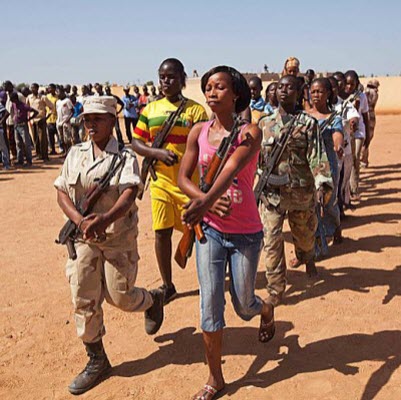
Attagara, a border community with Cameroon is about 10 kilometres southeast of Pulka District in Gwoza Local Government Area of Borno State and about 130 kilometres from Maiduguri, the state capital. Of late, local people across Borno state have stepped up the fightback against Boko Haram, having borne the brunt of its brutal terrorist campaign.
Yesterday, scores of gunmen suspected to be members of Boko Haram were killed yesterday through the combined efforts of members of the vigilante youths, otherwise known as the Civilian Joint Task Force and the military in Kawuri village in Bama Local Government Area of Borno State. Mamman Yakubu, a vigilante youth that participated in repelling the insurgents, said they lynched the terrorists because Boko Haram members hardly reveal any secrets when arrested.
One top security source, who confirmed the incident, said that three dead bodies of the terrorists were recovered yesterday morning in Kawuri. He added that more of the terrorists were killed in a nearby bus, close to Kawuri when they attempted to flee to the Sambisa Forest.

FEBRUARY 13, 2011
BY TRENT GILLISS, SENIOR EDITOR
There are a few moments from behind the glass that stop me dead in my tracks — times during an interview when a wise voice creates a new opportunity to hear something differently. To challenge a conceit. To envelop the listener in the womb of silent storytelling and place one in a position of listening profundity. Vincent Harding did just that.
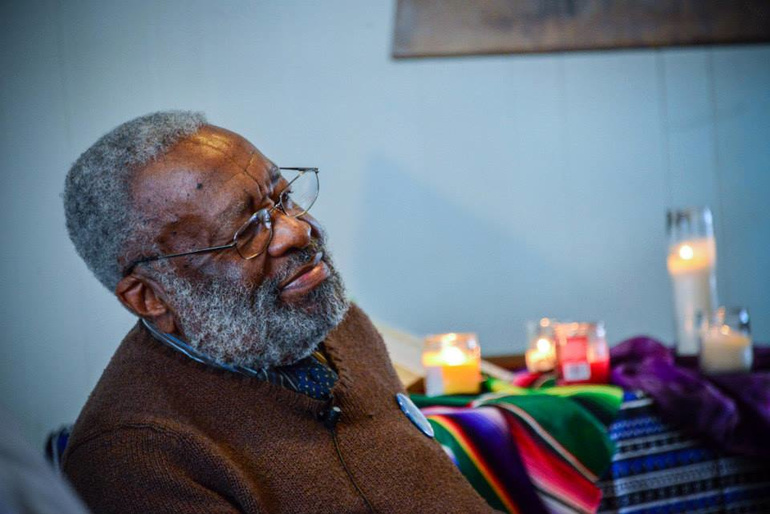
Vincent Harding
In the audio above, the theologian and speechwriter for Martin Luther King Jr. creates that vulnerable opening and ever so gently corrects, without admonishment, when the “Kumbaya” is referred to as a soft and squishy momentof song:
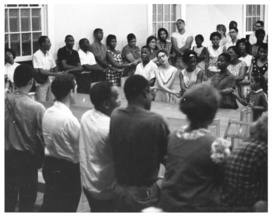
“Whenever somebody jokes about ‘Kumbaya,’ my mind goes back to the Mississippi summer experience where the movement folks in Mississippi were inviting co-workers to come from all over the country, especially student types to come and help in the process of voter registration and freedom school teaching and taking great risks on behalf of that state and of this nation. …
In group after group, people were singing:
‘Kumbaya. “Come by here my Lord. Somebody’s missing Lord. Come by here.” ‘
I could never laugh at kumbaya moments after that. Because I saw that almost no one went home from there. This whole group of people decided that they were going to continue on the path that they had committed themselves to and a great part of the reason why they were able to do that was because of the strength and the power and the commitment that had been gained through that experience of just singing together,Kumbaya.”
I know I’ve used this this reference to a “kumbaya moment” in a slightly pejorative way. This no longer holds true. I can no longer judge using this label. Let Vincent Harding’s story be a lesson for us all.
>via: http://www.onbeing.org/blog/youll-never-hear-kumbaya-same-way-again/3860

photo by Alex Lear
I Am A Citizen In The Country Of Your Smile
I was looking for myself, confused
By the store-bought maps
None of which led directly to me
All the interstates had curious detours
Some straight through your heart
One or two were back roads
Small moments—no, not mini-malls
But one room country stores
Everything from chicken feed to calico cloth
Candy and pickled pig feet in big glass jars,
A catalogue for ordering from elsewhere
I lay listening to your breathing
My head between your breasts
My lips longing to suck your relaxed nipples
To erectness, that taste moving my tongue
My hands exploring everywhere
An amateur urban planner mapping layouts
For a futuristic city of light and love
You open your thighs and say you need beaches
On the borders and kisses in the nether regions
Plus, you tell me: “you must volunteer to share
All chores, soap and water have no gender
Brooms nor mops have genitals
And if you don’t want to, I don’t want you to
We can agree to disagree but fighting is forbidden
There may be war in the world
But there will be peace in this village
Think about who I am
Before you say what you want us to be”
I paused, I listened, I surrendered
Happy with the terms of agreement
I sincerely pledged allegiance
—kalamu ya salaam