
JANUARY 20, 2014
One Statistic About
The World In 2014
That Would Outrage
Martin Luther King Jr.
BY JUDD LEGUM
“One Statistic About The World In 2014 That Would Outrage Martin Luther King Jr.“
 CREDIT: OXFAM
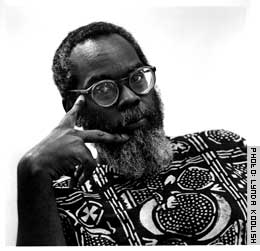
Martin Luther King’s legacy has been reduced in popular culture to an advocate for basic racial equality under the law. But King’s advocacy for racial equality was inextricably linked to a call for substantive economic justice for all races. He explained this in his July 4, 1965 sermon at Ebenezer Baptist Church:
About two years ago now, I stood with many of you who stood there in person and all of you who were there in spirit before the Lincoln Monument in Washington. As I came to the end of my speech there, I tried to tell the nation about a dream I had. I must confess to you this morning that since that sweltering August afternoon in 1963, my dream has often turned into a nightmare… And oh, I continue to see it shattered as I walk through the Harlems of our nation and see sometimes ten and fifteen Negroes trying to live in one or two rooms. I’ve been down to the Delta of Mississippi since then, and I’ve seen my dream shattered as I met hundreds of people who didn’t earn more than six or seven hundred dollars a week. I’ve seen my dream shattered as I’ve walked the streets of Chicago and seen Negroes, young men and women, with a sense of utter hopelessness because they can’t find any jobs. And they see life as a long and desolate corridor with no exit signs. And not only Negroes at this point. I’ve seen my dream shattered because I’ve been through Appalachia, and I’ve seen my white brothers along with Negroes living in poverty. And I’m concerned about white poverty as much as I’m concerned about Negro poverty.
On the day that America celebrates his birth, OxFam has released a report detailing the shocking economic inequality in America and around the world. Most strikingly, the richest85 people own as much wealth as the poorest 50% of the world’s population — that’s 3.5 billion people.
Among the other findings in the report:
1. Half of the world’s wealth is owned by 1% of the population.
2. Since the late 1970s, tax rates for the richest have fallen in 29 of the 30 counties for which data is available. This means the wealthy are not only making more but paying a smaller percentage in taxes.
3. Wealthy individuals and companies hide $21 trillion in wealth in a web of tax havens around the world. This exceeds the total GDP of the United States.
4. Global corporations routinely use their clout to avoid paying taxes in Africa, where poverty is most acute.
5. In the U.S. the top 1% captured 95% of the growth after the 2009 financial crisis. The bottom 90% actually became poorer.
You can read the full report here.
>via: http://thinkprogress.org/economy/2014/01/20/3184011/statistic-world-2014-outrage-martin-luther-king/
__________________________

20 January 2014

Working for the Few
Political capture and economic inequality
Downloads

Ricardo Fuentes-Nieva, Head of Research, Oxfam GB; Nicholas Galasso, Research and Policy Advisor, Oxfam America
Almost half of the world’s wealth is now owned by just one percent of the population, and seven out of ten people live in countries where economic inequality has increased in the last 30 years. The World Economic Forum has identified economic inequality as a major risk to human progress, impacting social stability within countries and threatening security on a global scale.
This massive concentration of economic resources in the hands of fewer people presents a real threat to inclusive political and economic systems, and compounds other inequalities – such as those between women and men. Left unchecked, political institutions are undermined and governments overwhelmingly serve the interests of economic elites – to the detriment of ordinary people.
In this paper, Oxfam shows how extreme inequality is not inevitable, with examples of policies from around the world which have reduced inequality and developed more representative politics, benefiting all, both rich and poor. Oxfam calls on leaders at the 2014 World Economic Forum at Davos to make the commitments needed to counter the growing tide of inequality.
>via: http://www.oxfam.org/en/policy/working-for-the-few-economic-inequality