Info

Kalamu ya Salaam's information blog

Archive for


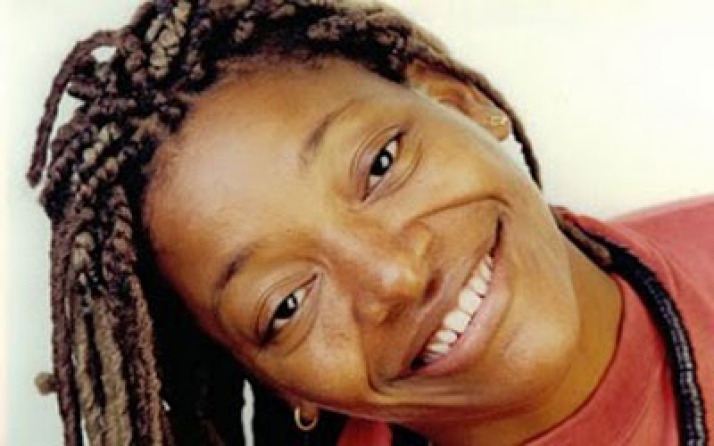
photo by Alex Lear

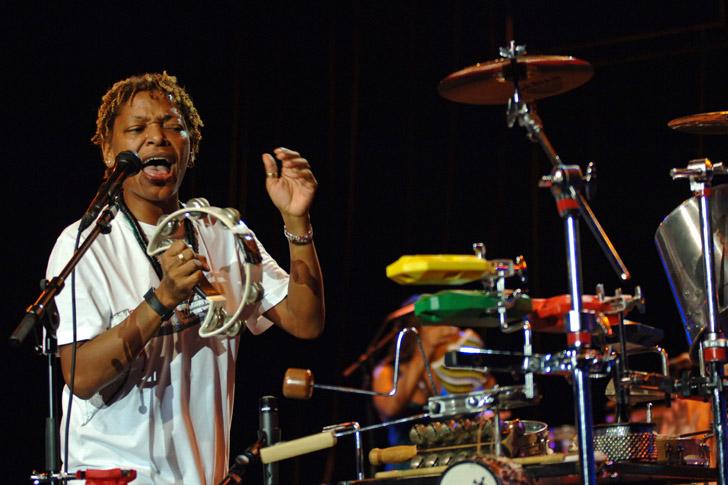
photo by Alex Lear


YESTERDAY WAS SO BEAUTIFUL

(and its passing so sad)


when the day transitions

it goes to night

first, before

there can be another

day


sometimes

a day has been

so beautiful

that in the night

instead of looking

forward

to another day

we can only grieve

for what is gone


but each day

is its own being

each being

has their own

day


whatever beauty

we find missing

tomorrow, whatever

we might miss

from yesterday

well, that beauty

we must become


tomorrow

we must be

as beautiful

as the departed day

we mourn in the anguish

of night


—kalamu ya salaam


iupui

IUPUI Poetry Contest

The IUPUI Office of Academic Affairs and the IU School of Liberal Arts invite all high school age students within the state of Indiana to participate in the IUPUI Poetry Contest. The deadline for the 2014 contest is 5:00 p.m. EST on Saturday, May 31.

First, second, and third-place winners will receive a monetary award, publication of their poem on our website, and are eligible to receive a $1500 RISE scholarship upon enrollment at IUPUI. Students receiving honorable mentions will receive a book by one of our judges and publication on our site. All poetry contest applicants may receive additional scholarships upon being admitted to IUPUI based upon their academic and financial aid qualifications.
Monetary Prizes

1st Place :   $300
2nd Place:   $200
3rd Place:    $100

In addition to cash prizes for the top three poems, all winners and 20 finalists will receive a collection of poems by the contest judge and an invitation to our awards ceremony at IUPUI in the fall semester. 

By submitting your poem to the IUPUI Poetry Contest, you grant us permission to post your poem online as well as in other publicity materials for the university. Students retain full publication rights to their poems.

SUBMIT HERE


>via: http://poetry.iupui.edu


our space


love as revo

Greetings loved ones! So, we’re teaming up with Q-Zine to co-edit an upcoming issue on ‘Love as Revolutionary Practice.’ We’d love for all of you who follow the blog to submit! Details above or here.

OR…. you can write to us at OurSpaceIsLove@gmail.com 

More Love (and we can’t wait to receive your submissions!) 

aMiNa & Jessica ♡♡


>via: http://ourspaceislove.tumblr.com/post/87070375659/greetings-loved-ones-so-were-teaming-up-with


caribbean commons

Call for Panels and Papers -10th Conference on Cuban and Cuban-American Studies

cuba

“More than White,

More than Mulatto,

More than Black”:

Racial Politics in Cuba and the Americas

Call for Panels and Papers
10th Conference on Cuban and Cuban-American Studies
Deadline for submission: 31 October 2014

Conference Dates: 26-28 February 2015
Modesto A. Maidique Campus
Miami, Florida

The Cuban Research Institute (CRI) of Florida International University continues its tradition of convening scholars and other persons interested in the study of Cuba and Cuban Americans by announcing its 10th Conference. CRI encourage the submission of panels and papers concentrating on any aspects of the main conference theme, but will consider all submissions relevant to the history, economy, politics, culture, society, and creative expression of Cuba and its diaspora.

In 1893, the Cuban patriot, journalist, and poet José Martí published his famous article, “Mi raza” (“My Race”). In it he argued against fomenting racial divisions within the context of Cuba’s independence struggle from Spain. His axiom that “man is more than white, more than mulatto, more than black” has been extensively cited since then. Although Martí’s thought has been praised for promoting racial integration and equality, scholars and activists have criticized the practical implications of his model of racial democracy in Cuba and elsewhere.

Guidelines for Presenting Panels and Papers

Although CRI prefers panel proposals, they will attempt to group individual papers in sessions according to shared themes. Panels will ideally include four paper presenters, a chair (who may be one of the presenters), and a discussant. Panels may feature five paper presentations if they do not include a discussant. Participants may perform two roles at the conference (chair, discussant, roundtable participant, or paper presenter) but may not present more than one paper. Submissions may be in English or Spanish.

Proposals for panels or roundtables must include a general description of the theme and one-page abstracts of each participant’s paper. Each presentation will be limited to 20 minutes. The following information must be submitted for each participant: full name, role in the session, academic affiliation, title of presentation, preferred addresses, office, cell, and home phone numbers, fax, and email address. Persons wishing to submit individual papers must present a one-page abstract and all pertinent personal data.

The deadline for submission of all paper and panel proposals is 31 October 2014.Notifications of acceptance (or refusal) will be sent out by 1 December 2014. For further information about the conference and other CRI activities, please visit their websitehere. 

All submissions and requests for information should be sent to cri2015conference@gmail.com. An acknowledgement of receipt will be sent.

The Tenth Conference on Cuban and Cuban-American Studies takes Martí’s dictum as a cue for further academic inquiry and public debate. Their main theme, Racial Politics in Cuba and the Americas, invites comparisons between Cuban experiences of race and those of other Latin American and Caribbean peoples (such as Puerto Ricans, Dominicans, Haitians, and Brazilians), as well as their diasporic communities. Although CRI emphasizes the racial politics that emerged from the African-European encounter, they welcome analyses focusing on other racialized groups in Cuba and the Americas. CRI is especially interested in examining the economic, social, and cultural underpinnings of racial politics, as well as their histories, enduring significance, and potential futures.

Panels and papers could focus on but are not limited to the following topics:

  • Conceptualizations of race, racialization, racial identity, race relations, mestizaje, and other related terms as they apply to the experiences of Cubans and other peoples in the Americas
  • Differences and similarities between the Cuban system of racial classification and that of other Latin American and Caribbean countries
  • The origins of race relations in Cuba and the Caribbean during the days of the colonial slave plantation system
  • The impact of Chinese indentured labor on race relations in Cuba and the Caribbean
  • Changes in racial discourses and practices, political culture, public opinions, and attitudes toward race in Cuba and other Latin American and Caribbean countries
  • The contemporary debate about the ethnic and racial diversity of the Cuban population
  • The racial politics of the Cuban exodus to the United States and other countries over time
  • Afro-Latinidad as an alternative concept of strategic identities and alliances
  • Interactions between Cubans and other ethnic and racial groups in the United States, particularly in the Miami metropolitan area
  • The impact of racial prejudice and discrimination in the educational, occupational, and housing markets of Cuba and the United States
  • Analysis of the multiple intersections among race, ethnicity, gender, sexuality, class, and other factors, both in Cuba and in the diaspora
  • Literary, artistic, musical, and religious expressions of racial identities in Cuba and its diaspora
  • The performance of blackness in theatre, music, dance, cinema, and the visual arts
  • The role of Afro-Cuban intellectuals, writers, and artists in the development of black consciousness
  • The rise in racial activism in Cuba and the Americas and its influence on the ideology of racial democracy
  • Historical and contemporary exchanges between Afro-Cubans and other Afro-descendants in the Americas
  • The racial politics of civil rights discourse
  • The effects of the “Special Period in Times of Peace” on racial inequality in Cuba
  • The racially differentiated impact of family remittances and the persistence of socioeconomic gaps between people of African and European origin in Cuba
  • The representation of race in the media


>via: http://caribbean.commons.gc.cuny.edu/2014/05/28/call-for-panels-and-papers-10th-conference-on-cuban-and-cuban-american-studies/


shadow & act

MAY 7, 2014


Trailer:

Provocative Doc ‘Out In The Night’

(4 Gay African American Women

& A Tragic Miscarriage Of Justice)


BY TAMBAY A. OBENSON


An update on a project we first profiled 2 summers ago, when it was one of 10 projects selected to receive completion funds from The Women In Film Foundation’s Film Finishing Fund (WIFF FFF), which supports films by, for or about women by providing cash grants of up to $15,000 and in-kind services.

Previously titled The Fire This Time, and now called Out In The Night, and directed by Blair Doroshwalther, the feature documentary, which has been in development since 2009, is now complete and will make its world premiere at the Los Angeles Film Festival, which runs from June 11 to June 19.

Its synopsis reads:

Under the neon lights of the gay-friendly West Village neighborhood of New York City, four young African-American women are attacked by an older man, and then face slanderous media coverage and egregious sentences as they are charged and convicted as a “Lesbian Gang” for defending themselves.

The women came to be known as the New Jersey Four.

Out In The Night tells the story of the women’s trial and prison sentences, and the years-long fight by relatives and activists to get them released, revealing how the media, homophobia, and racism all work together to stigmatize and victimize gay people of color.

Thanks to a 2007 report by Colorlines, here’s a description of the real-life incident:

On Aug. 16, 2006, seven young, African-American, lesbian-identified friends were walking in the West Village. The Village is a historic center for lesbian, gay, bi and trans (LGBT) communities, and is seen as a safe haven for working-class LGBT youth, especially youth of color. As they passed the Independent Film Cinema, 29-year-old Dwayne Buckle, an African-American vendor selling DVDs, sexually propositioned one of the women. They rebuffed his advances and kept walking. “I’ll f— you straight, sweetheart!” Buckle shouted. A video camera from a nearby store shows the women walking away. He followed them, all the while hurling anti-lesbian slurs, grabbing his genitals and making explicitly obscene remarks. The women finally stopped and confronted him. A heated argument ensued. Buckle spat in the face of one of the women and threw his lit cigarette at them, escalating the verbal attack into a physical one. Buckle is seen on the video grabbing and pulling out large patches of hair from one of the young women. When Buckle ended up on top of one of the women, choking her, Johnson pulled a small steak knife out of her purse. She aimed for his arm to stop him from killing her friend. The video captures two men finally running over to help the women and beating Buckle. At some point he was stabbed in the abdomen. The women were already walking away across the street by the time the police arrived. Buckle was hospitalized for five days after surgery for a lacerated liver and stomach. When asked at the hospital, he responded at least twice that men had attacked him. There was no evidence that Johnson’s kitchen knife was the weapon that penetrated his abdomen, nor was there any blood visible on it. In fact, there was never any forensics testing done on her knife. On the night they were arrested, the police told the women that there would be a search by the New York Police Department for the two men—which to date has not happened. After almost a year of trial, four of the seven were convicted in April. Johnson was sentenced to 11 years on June 14. Even with Buckle’s admission and the video footage proving that he instigated this anti-gay attack, the women were relentlessly demonized in the press, had trumped-up felony charges levied against them, and were subsequently given long sentences in order to send a clear resounding message—that self-defense is a crime and no one should dare to fight back.

The 4 women are Renata Hill, Patreese Johnson, Terrain Dandridge, and Venice Brown.

Last spring, the filmmaker raised over $26,000 in completion funds, via Kickstarter – a fundraising campaign that was featured on this blog. 

The documentary will make its world premiere at the LAFF on June 12.

Check out the trailer below:

>via: http://blogs.indiewire.com/shadowandact/trailer-provocative-doc-out-in-the-night-4-gay-african-american-women-a-tragic-miscarriage-of-justice


Messy notes on Mogadishu

farah 01

By Idil Farah

When you leave Mogadishu, you must remember how terrified of the planes you were. Frantically searching the interwebs for casualty history of their McDonnell MD-80 flight liners. You’re a hypocrite who commits herself to all things African, unless they have wings and seek to transport your body from one space to another. Technology is for the melanin challenged, your self-hating fear explains. The mortars terrified you too, as did the hungry boys who come baring body amour made of molten trauma seeking more of Mogadishu’s carcasses as penance. You try to still your mind and not think of the 1001 ways you can expire in the next few moments while you wait for this struggling plane. Instead, you’ll sit at Aden Adde International Airport, browsing all the images that fill your Smartphone. You delight at the faces of Mogadishu’s sons and daughters, and marvel at the possible reactions those images would instill in homesick friends. Then the remains of your feeble ethics will interject and tell you that you mustn’t publish faces of children you haven’t fed. You’re a writer now, and writers ought to have words in their pockets and limbs, words about what you’ve just seen in Mogadishu. But you have nothing, no letters, no poetic syntax, no scathing rhetoric, no geopolitical insight, nothing. You wanna write this city and turn those paragraphs into authentic accounts of a deeply majestic place. You’ll laugh at the girl who once wanted to create movements here, who had no answers to the, ‘how’, ‘when’ questions, but had the answers for the, ‘why’ and ‘where’ ones.

You’ve been lucky. Nothing irks you more than the life examined through the juxtaposition of one’s privileged life to the have-nots, but you’ll do it anyway. It’s the only rubric you got. You remember the nights you laid eyes wide open in you bed, while your co-citizens slept in makeshift tents made out of tired steel, smelling of muck and misery, a thought enough to split the most hardened of you into a million little privileged pieces. This could’ve been you, us, you think. And you really don’t know what to quite do with that reality. The crocodile tears you share with your citizens. You keep your head down and windows rolled up as you drive through Mogadishu’s present, shaking your collective heads at how far you’ve fallen and the lives never lived. You know shit is bad when you to point to the dictatorship era as your very own La Belle Époque. You say a really silent secular prayer for comrade Siyaad. You hate yourself for that. Sometimes you find yourself cursing your working class wallet for not carrying enough dollars to soothe the many bellies of kids who resemble yesteryear’s mini you. And sometimes, you quiet the screaming woman inside with rationales like, “there’s so many of them, what the fuck can I do?” “It’s the bloody governments fault and the fucking UN”. You make promises to write scathing tweets about the UN and then retreat because you got friends who feed there. You’ll write a Facebook status instead.

farah 02

You sip on your papaya juice with earphones belting, “Inner City Blues”, hoping you can teleport into a netherworld and dead the sounds of your hurt city spitting deafening, empty fridges rhymes. There’s not all hurt here, but beauty too. Most live on the faces of those who retreat at night. The mothers whose stories have are reduced to NGO jargon like IDPs, and in the faces of fatigued soldiers who’ve turned in their militia boots and fire for a chance at a honest living. They say they’ll die for her, Somalia, as soon and they’re paid their 100 dollar a month salary, now overdue for six months. They sit at their checkpoints, faces at war with the Mogadishu sun, waiting for generous days. You’re what we call one of the many PTSDs running around, and you just got diagnosed in Mogadishu. Tired diasporans who tell lies about a purpose-driven return, when you’re all just looking for similar faces and welcoming tongues. You hated Canada, and Europe won’t have any of you. If only the euros knew how little you like to work and how much you love haram liqueurs. You then ask your brother for the address holding your kid memories hostage. He gives it to you and warns you not to visit. Fears the new proclaimed tenants might view your nostalgic attempt at an Instagram moment as move to end their years with a fixed address. You go anyway and forget the camera.

farah 03

You call family, mainly compromised of beloved friends, who want you out of Mogadishu. They say it’s not safe, I tell them it’s safe; the mortars in the background betray your feigned courage. Your father tells you to leave, and by that he means, “don’t awaken the city we killed in 1991″…You tell him she had cancer and her death was inevitable. He laughs, partly annoyed, partly amused, calls you a cheeky troll, “Af Mishar”. You wish he would laugh like that with you again in Mogadishu.
You’re lost and sans a purpose, can no longer assembly Mogadishu in your daydreams at work, no longer create fetishized accounts of how perfect she could be. You’ve now met her and she doesn’t seem familiar or friendly. You’re an asshole for expecting warmth from a place you failed. This hurts you. You’re gonna stop writing now because you hear gunshots and need Curtis Mayfield to calm you down. Your battle between the west and Mogadishu has ended, both lost, and all of you casualty. You tell your friend You’re done with Mogadishu, disgusted with the administration, the government affiliated kleptomaniacs, the pseudo feminists who enjoy the company of men in polyester suits versus the sight of the women they come to save, the sounds of foreign weapons ready to dislodge in local African bodies. You’re overwhelmed and so unprepared for this. He tells you, “what did you expect? This is Mogadishu homie”. He suggests you wrap it up and consider Nairobi or maybe South Africa as home substitute, you tell them him they harass and kills Somalis in those places too. He replies, “I thought you wanted a close substitute”. Touché. You hear Helsinki is nice and they got a Somali MP there. Anywhere but Canada, can’t go back to the one who never let you in. You’re thinking too much, maybe you need a picture of Lido Beach.


shadow & act

MAY 22, 2014


Drama Feature ‘Leave To Remain’

Follows Trials & Triumphs

Of Young Asylum Seekers In UK


BY TAMBAY A. OBENSON

From director Bruce Goodison (Our War, My Murder) comes a new film titled Leave to Remain, a provocative coming-of-age drama about young people cut loose from society because they live in the UK as asylum seekers.

In the UK, when an asylum seeker seeks leave to stay in the UK, its called “leave to remain,” hence the title of the film; Further, as the film’s website states, this can be anything from a day to 3 years, and comes with restrictions on being able to work and getting an education.

Here’s the film’s brief synop:

3 teenagers forced to leave everything behind, learn to live alone in a hostile country. That country is the UK. Fighting for survival they form a unique and unbreakable bond, but all is not what it seems in their game of chance. The film will show that despite escaping terrible danger and living with constant risk, young unaccompanied asylum seekers have the same fears, hopes and dreams as any teenager.

3+ years in the making, director Goodison spent years working with young asylum seekers, during which he was granted access to interviews and court appeals, as well as public officials (defenders, social workers, doctors, and more). The completed film will be based on Goodison’s research; and, while it will be scripted fiction, it will have a documentary-like, realistic quality to it.

The filmmakers assembled a cast of non-professional actors who are from the refugee community, as well as up-and-comers, after running film workshops and providing training for these teenagers who would become on-screen stars.

Below, meet some of the young men and women (mostly of African and Middle Eastern descent) who make up the film’s cast: the 3 principles are played by Yasmin Mwanza, Massieh Zarrien, and Noof Ousellam; rounding out the cast are Tango Mwanza, Gloire Mbote, Tressy Nzau.

A trailer for the film is embedded below, followed by photos of the cast.

Leave To Remain is currently touring the international film festival circuit, and is heading to Prague next (in June) for the Zlin Film Festival. To follow its travels, click HERE for future screening dates and locations:


Yasmin Mwanza
Noof Ousellam
Tango Mwanza
Gloire Mbote
Massieh Zarrien


>via: http://blogs.indiewire.com/shadowandact/drama-feature-leave-to-remain-follows-trials-triumphs-of-young-asylum-seekers-in-uk


bustle

May 28, 2014


MAYA ANGELOU’S FINAL TWEET

IS JUST AS BEAUTIFUL

AS YOU’D EXPECT


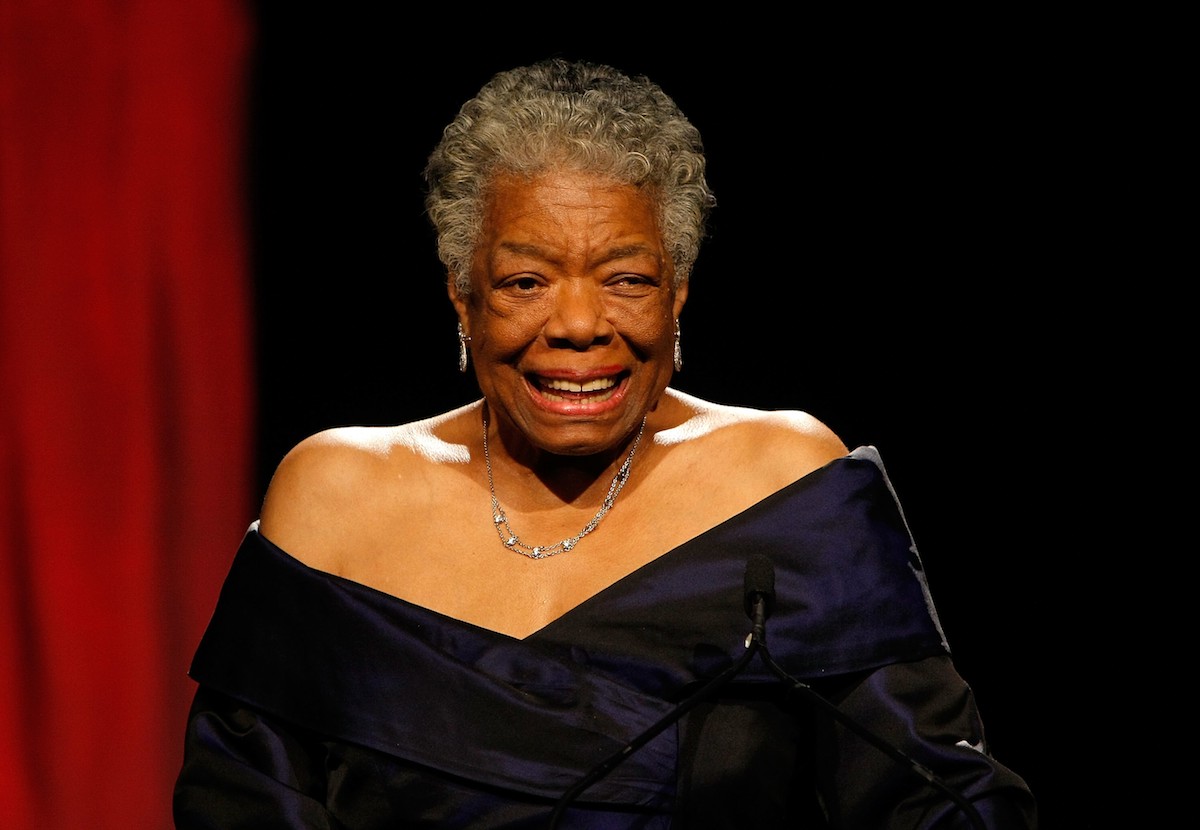
Jemal Countess/Getty Images Entertainment/Getty Images

Jemal Countess/Getty Images Entertainment/Getty Images

There is perhaps no famous person more perfect for Twitter than Maya Angelou. The medium served Angelou, who passed away at 86 years old Wednesday, and her followers perfectly — with just 140 characters, the famed “Still I Rise” poet was able to deliver inspiration, love, and beauty through her words, proving that the social media network could be valuable for more than just negativity and cat photos. ”Let the brain go to work, let it meet the heart and you will be able to forgive”; ”If we have someone who loves us—I don’t mean who indulges us, but who loves us enough to be on our side—then it’s easier to grow resilience”; ”Life loves to be taken by the lapel and told: ‘I’m with you kid. Let’s go’” — it was difficult to not take Angelou’s words to heart when logging onto her feed. Or not to smile when noticing the beauty in the simplest of tweets: ”This a a wonderful day. I’ve never seen this one before.”

And Angelou’s final tweet was just as lovely. Penned May 23, just days before she passed away after battling health problems, the poet’s last 140-character contribution referenced the voice of a being she would soon meet:

maya tweet 01

Indeed, based on her Twitter feed, Angelou’s final days were serene. Celebrating Mother’s Day, the concept of “overcoming,” her 86th birthday — the poet’s life appeared filled with the joy and inspiration readers felt digesting her work. (And Angelou’s family seemed to confirm that in a statement on Facebook, saying the poet’s “ascension was not belabored by the loss of acuity or comprehension.” And despite the fact that she is no longer among us, even she was plenty conscious of her staying power:

maya tweet 02

No question about it.


__________________________


Jan. 13, 2014


The Story Behind

This Beautiful Photo

Of Maya Angelou And

Amiri Baraka Dancing

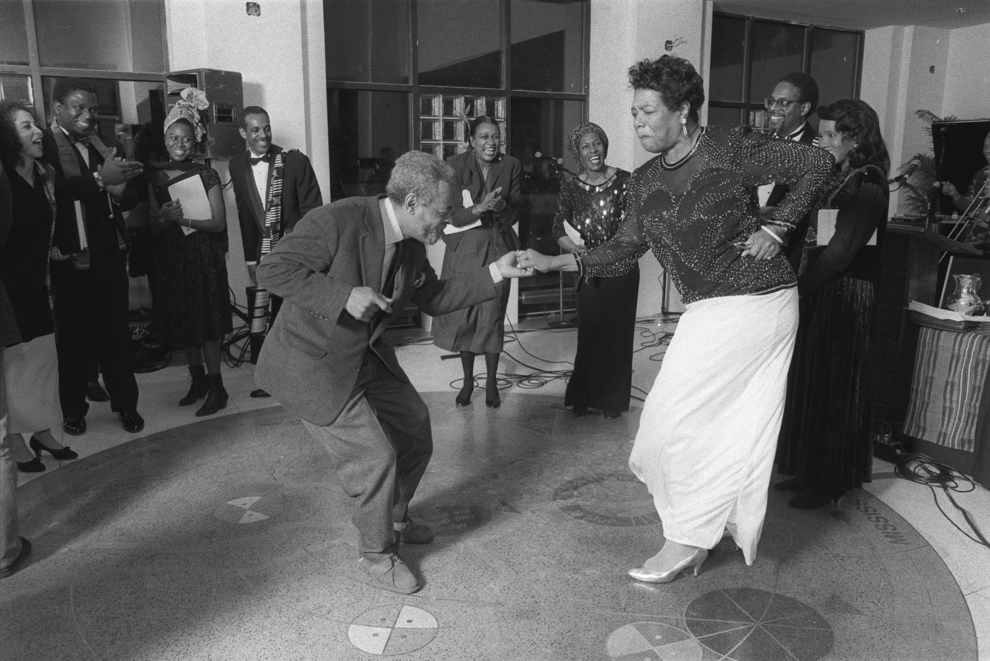
Angelou took to Facebook to share this story about the photo of her dancing with the late Baraka.posted on


 BuzzFeed Staff


After the passing of the poet and activist Amiri Baraka on Thursday, many shared their remembrances of the prolific author and theworks he gave the world. Maya Angelou took to Facebook to share the story behind this photo:

Chester Higgins, Jr./The New York Times

Chester Higgins, Jr./The New York Times

“Amiri Baraka was already the people’s poet when he answered to the name LeRoi Jones. We had a very famous photograph taken in 1991 by Chester Higgins, Jr. The photograph appeared in the New York Times. At the time the legend under said in effect, two of America’s great poets dancing a traditional African rite dance over the remains of Langston Hughes at the Schomburg Center for Research in Black Culture. I telephoned Amiri Baraka and said were you doing traditional African dance, he said, “No, I was doing the jitterbug.” I said I was doing the Texas hop and it became a Jet magazine centerpiece. Rest in peace my brother. I give condolences to everybody, because when a poet dies something hopeful in the national psyche disappears.”


>via: http://www.buzzfeed.com/hnigatu/the-story-behind-this-beautiful-photo-of-maya-angleou-and-am

__________________________


melissa

MHP   |  September 16, 2012


Maya Angelou:

We lack courage, wisdom

to educate ourselves

Melissa Harris-Perry shares her exclusive interview

with the acclaimed Dr. Maya Angelou.

Visit NBCNews.com for breaking news, world news, and news about the economy


>via: http://video.msnbc.msn.com/mhp/49052367#49052367